Rotator Cuff Tear: Causes, Symptoms, Diagnosis and Treatment Options
Understanding Rotator Cuff Tears
Have you noticed shoulder pain when lifting your arm, getting dressed, or playing badminton? These symptoms may indicate a rotator cuff tear, a common shoulder injury that affects movement and strength. Some tears develop after a fall, while others occur gradually due to tendon wear. Understanding rotator cuff tear symptoms, causes, diagnosis, and treatment options can help you decide when to seek medical attention and how to manage your shoulder health.
What Is a Rotator Cuff Tear?
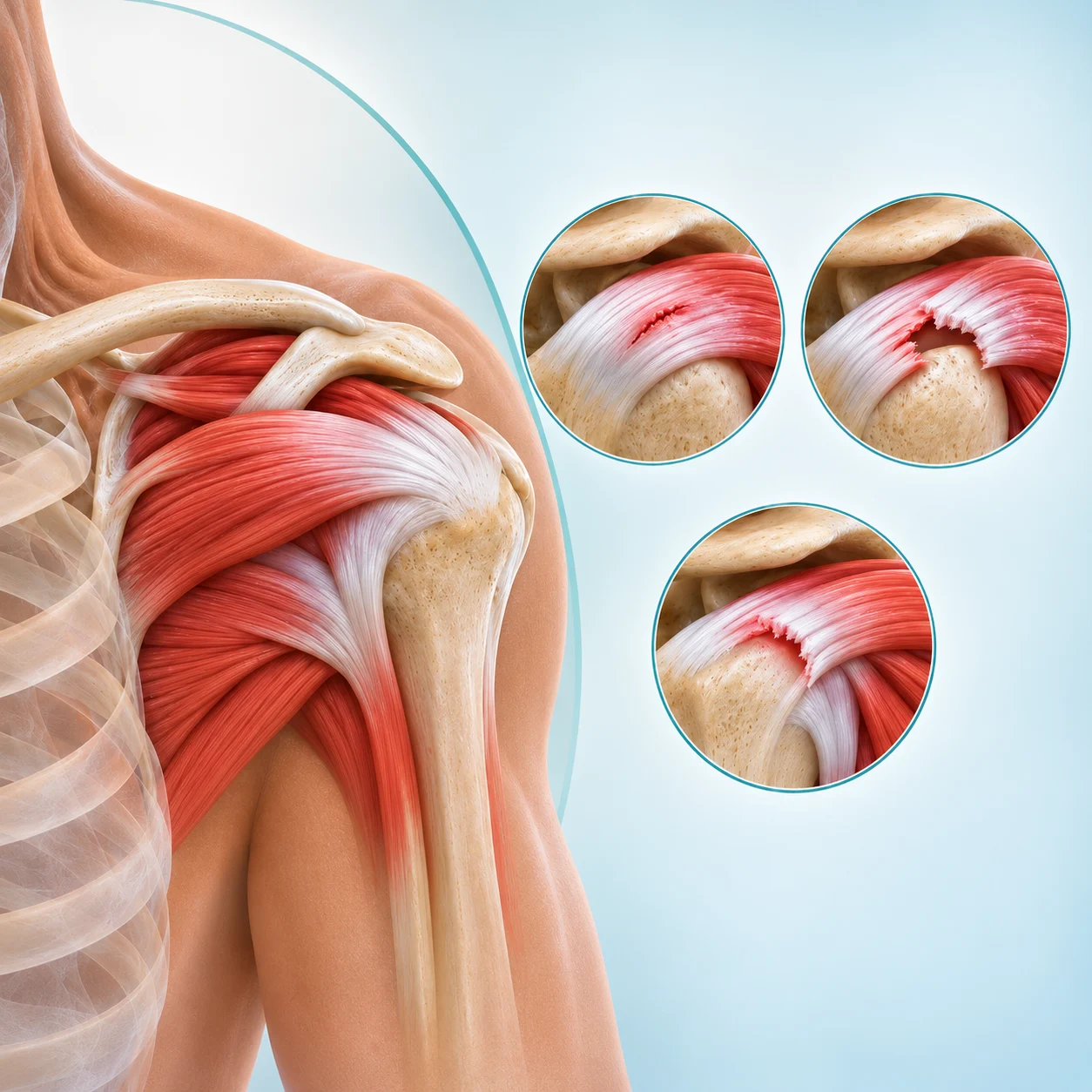
The rotator cuff consists of four muscles and their tendons that support your shoulder joint. They help you lift, rotate, and control your arm.
A rotator cuff tear occurs when one or more tendons become damaged or detach from the upper arm bone.
Types of Rotator Cuff Tears
- Partial-Thickness Tear: The tendon develops a tear but remains partly intact.
- Full-Thickness Tear: The damage extends through the entire tendon thickness, sometimes causing complete detachment from the bone.
- Supraspinatus Tear: This affects the supraspinatus tendon, the most commonly injured rotator cuff tendon.
A full-thickness tear does not always mean the entire tendon has detached. Tear size, tendon retraction, and muscle condition also influence treatment decisions.
What Causes a Rotator Cuff Tear?
Rotator cuff tears generally develop through sudden injuries or gradual tendon degeneration.
1. Sudden Shoulder Injuries
Falling onto an outstretched arm, lifting heavy weights, or experiencing a sports injury can damage shoulder tendons. You may notice sudden pain and difficulty raising your arm.
2. Age-Related Tendon Wear
Tendons gradually weaken with age, particularly after 40. Repeated daily movements may contribute to degenerative tears.
3. Repetitive Overhead Activities
Activities such as swimming, badminton, cricket, painting, and construction work can place repeated stress on shoulder tendons.
4. Other Risk Factors
Smoking, poor tendon health, and previous shoulder injuries may increase the likelihood of tendon damage.
A Sports injury specialist in Mumbai can evaluate the underlying cause and recommend appropriate management.
What Are the Common Symptoms of a Rotator Cuff Tear?

Symptoms depend on the tear's location, severity, and whether it developed suddenly or gradually.
Common signs include:
- Shoulder Pain: Pain while lifting your arm or reaching behind your back.
- Night Pain: Discomfort when sleeping on the affected shoulder.
- Arm Weakness: Difficulty carrying objects or raising your arm.
- Restricted Movement: Trouble dressing, combing your hair, or reaching overhead.
- Clicking Sensation: Clicking or crackling during certain shoulder movements.
Some tears cause few symptoms. Shoulder arthritis and frozen shoulder can also produce similar complaints.
If weakness begins suddenly after an injury, seek prompt medical assessment.
How Is a Rotator Cuff Tear Diagnosed?
Diagnosis begins with understanding your symptoms, injury history, and daily activities.
Physical Examination
Your doctor checks shoulder movement, muscle strength, painful positions, and specific tendon functions.
Imaging Tests
- X-ray: Helps identify arthritis, bone abnormalities, and other shoulder conditions.
- Ultrasound: Shows tendon damage and allows assessment during movement.
- MRI Scan: Provides detailed images of the tendons, muscles, and surrounding tissues.
MRI reports may describe tear thickness, size, tendon retraction, and fatty infiltration. These findings help doctors assess tendon condition and potential repair options.
An MRI finding alone does not determine whether surgery is necessary. Your symptoms, examination, and activity requirements remain important.
What Are the Treatment Options for a Rotator Cuff Tear?
Rotator cuff tear treatment in Mumbai depends on tear severity, pain, weakness, age, and activity level. Not every patient requires surgery.
Non-Surgical Treatment
Patients with partial tears or selected degenerative full-thickness tears may improve through conservative management.
Treatment options include:
- Physiotherapy: Improves shoulder movement, muscle strength, and functional control.
- Activity Modification: Reduces painful overhead movements and heavy lifting.
- Pain Medication: Helps manage discomfort when prescribed appropriately.
- Corticosteroid Injection: May provide short-term relief in selected patients.
Physiotherapy can improve symptoms, although most complete tendon tears do not naturally reattach to the bone.
When Is Rotator Cuff Surgery Needed?
Surgery may be considered when:
- Persistent pain or weakness limits daily activities despite rehabilitation.
- A significant traumatic tear causes sudden loss of shoulder function.
- Tendon damage affects work, sports, or essential arm movements.
- Clinical findings and imaging suggest a repairable tear that may benefit from surgery.
A Shoulder arthroscopy surgeon in Mumbai can assess tendon quality and discuss surgical and non-surgical options.
Arthroscopic Rotator Cuff Repair
During arthroscopic repair, the surgeon inserts a small camera and instruments through small incisions. Surgical anchors commonly help reattach the torn tendon to the bone.
Rotator cuff repair surgery in Mumbai aims to reduce pain and improve shoulder function. Results depend on tendon healing, tear characteristics, and rehabilitation. Most repairable tears do not require shoulder replacement. Selected patients with massive, irreparable tears and advanced joint damage may need a different approach. Read related guide, "Which Shoulder Replacement Is Best for Rotator Cuff Tear?", to understand when replacement may be considered.
Rotator Cuff Tear Recovery and Rehabilitation
Recovery depends on the tear and treatment.
After surgical repair, rehabilitation usually progresses through several stages:
| First 4–6 Weeks: | Protect the repair using a sling as advised. |
| Weeks 6–12: | Gradually restore shoulder movement under supervision. |
| Months 3–6: | Progress towards strengthening and selected activities. |
| Months 6–12: | Return to demanding sports or heavy work when cleared. |
These timelines vary according to the repair and rehabilitation protocol.
Without surgery, guided exercises may improve shoulder function over several weeks or months.
Some untreated tears remain stable, while others enlarge and develop muscle changes. Regular follow-up helps monitor symptoms and function.
When Should You Consult a Rotator Cuff Injury Specialist in Mumbai?
If shoulder pain affects your sleep, work, or daily activities, a specialist consultation can help identify the cause.
Dr. Aditya Pawaskar, Consultant Arthroscopic Surgeon and Sports Injury Specialist, evaluates shoulder injuries, including rotator cuff tears.
As a Rotator cuff injury specialist in Mumbai, he can assess your symptoms, examination findings, and imaging to discuss appropriate treatment options. The consultation helps determine whether physiotherapy, further evaluation, or surgical management may be suitable.
Frequently Asked Questions
Conclusion
A rotator cuff tear can affect shoulder strength, sleep, and everyday movement. Understanding the symptoms, diagnosis, and treatment options helps you make informed decisions. Physiotherapy may provide relief for many patients, while selected tears require surgical evaluation. If shoulder pain or weakness continues, consult a qualified shoulder specialist. Early assessment and appropriate rehabilitation can help you work towards improved shoulder function and a safe return to your activities.

Dr. Aditya Pawaskar, MS (Orthopaedics)
Specialist in Arthroscopy & Sports Injury, Mumbai