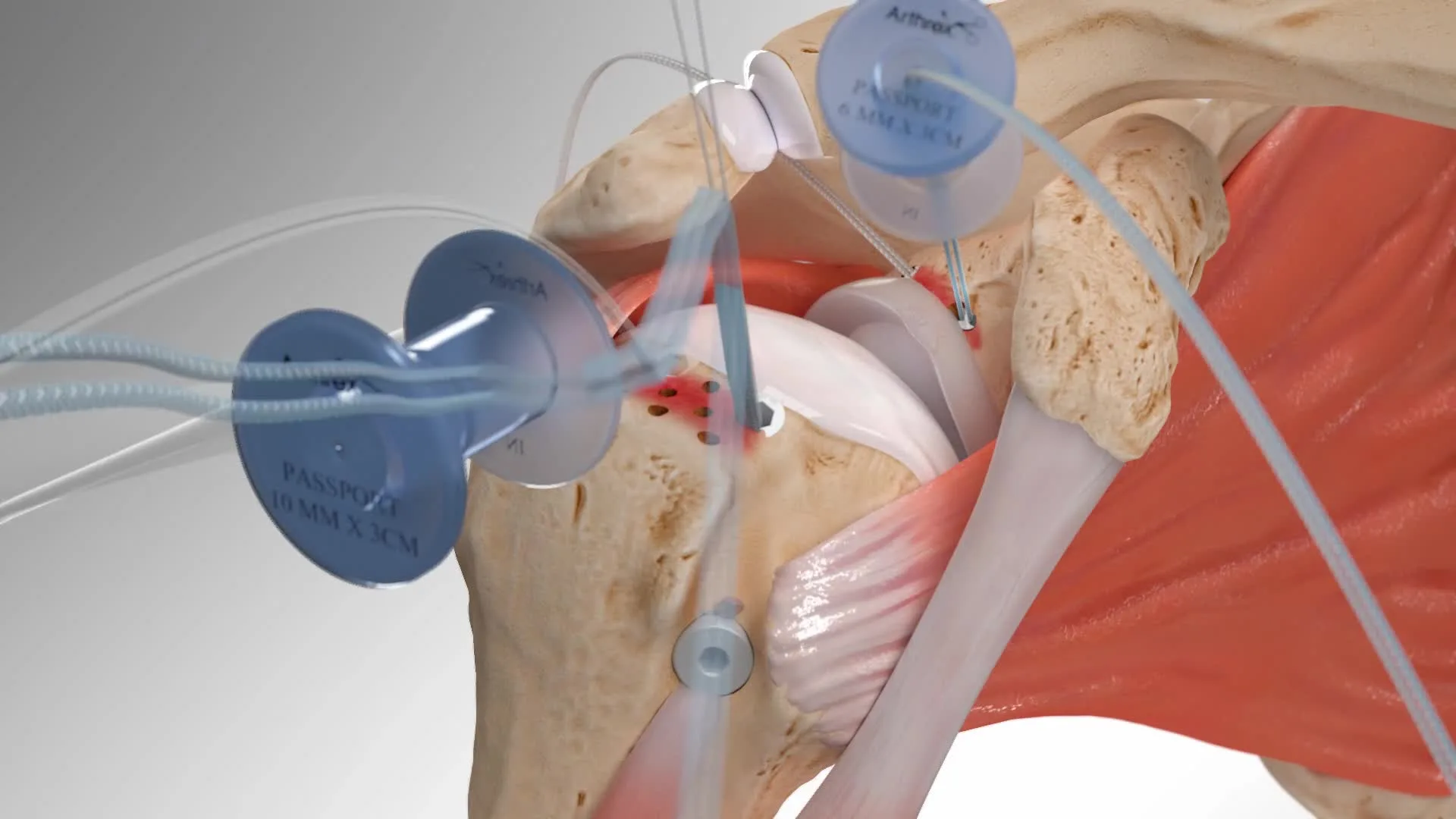
Superior Capsular Reconstruction for Massive Irreparable Rotator Cuff Tears
with Dr. Aditya Pawaskar, Consultant Arthroscopic Surgeon and Sports Injury Specialist in Mumbai
A Reconstruction Option When Direct Tendon Repair Is Not Feasible
This page focuses only on superior capsular reconstruction for massive or irreparable tears. Common repairable rotator cuff tears are covered on the separate arthroscopic repair page.
Superior Capsular Reconstruction (SCR) uses a graft to reconstruct the superior capsule and improve shoulder stability when a massive rotator cuff tear cannot be repaired directly. It is a distinct option for selected patients with irreparable tears, poor tendon quality or a failed previous repair—not a routine treatment for common repairable tears.
Indications for Superior Capsular Reconstruction:
Superior Capsular Reconstruction is typically considered when:
- Large Rotator Cuff Tears: The rotator cuff tear is large, irreparable, or has failed previous attempts at repair.
- Tissue Quality: The quality of the torn rotator cuff tissue is poor, making direct repair unlikely to succeed.
Sports Prone to Superior Capsular Reconstruction for Large Rotator Cuff Tears and Injury Risks:
Superior Capsular Reconstruction (SCR) is a surgical procedure often considered for large rotator cuff tears. Sports that involve repetitive overhead motions and significant strain on the shoulder may be associated with a higher risk of such injuries. In India, the following sports may be linked to a higher incidence of large rotator cuff tears requiring SCR:
- Cricket: Fast bowlers and players involved in frequent throwing actions, such as the fast-paced actions of cricket, may be susceptible to large rotator cuff tears.
- Badminton: The repetitive overhead motions, especially during serves and smashes in badminton, can contribute to significant shoulder strain.
- Tennis: The repeated overhead serving and strokes in tennis may lead to large rotator cuff tears over time.
- Volleyball: Frequent overhead hitting and serving in volleyball can place considerable stress on the rotator cuff, potentially resulting in large tears.
- Swimming: Competitive swimmers, particularly those using strokes like freestyle and butterfly with repetitive arm movements, may be at risk of large rotator cuff tears.
- Weightlifting: Heavy lifting and repetitive shoulder exercises in weightlifting can strain the rotator cuff, leading to significant tears.
- Basketball: The combination of jumping, shooting, and potential for collisions in basketball may contribute to large rotator cuff tears.
- Gymnastics: The intense upper body movements and weight-bearing on the shoulders in gymnastics may pose a risk of significant rotator cuff injuries.
- Throwball: Overhead throwing actions in throwball may increase the risk of large rotator cuff tears.
- Wrestling: Wrestling, with its intense physical contact and potential for awkward falls, can contribute to shoulder problems, including large rotator cuff tears.
Consult with Dr. Aditya Pawaskar, a Sports Medicine Specialist in Mumbai, to determine the most appropriate treatment for Knee & shoulder injuries based on individual cases and the latest medical advancements.