Will I Be Able to Play Sports Again After MCL Repair?
For athletes and active individuals, one of the biggest concerns after a Medial Collateral Ligament (MCL) injury is:
“Will I be able to play sports again after MCL repair?”
The good news is that many athletes successfully return to their previous level of activity after appropriate treatment and structured rehabilitation.
However, returning to sports is not based only on how much time has passed after surgery. The knee must regain:
- Stability
- Strength
- Flexibility
- Balance
- Sport-specific movement ability
Returning too early can increase the risk of re-injury and may affect long-term knee performance.
Dr. Aditya Pawaskar, Consultant Arthroscopic Surgeon and Sports Injury Specialist in Mumbai, provides specialised treatment and rehabilitation guidance for athletes recovering from MCL injuries.
Understanding MCL Repair Surgery
The Medial Collateral Ligament (MCL) is located on the inner side of the knee and helps maintain stability during movements such as:
- Running
- Cutting
- Jumping
- Changing direction
An MCL injury can occur due to:
- Sports collisions
- Sudden twisting movements
- Falls
- Direct impact to the knee
While many MCL injuries heal with non-surgical treatment, some severe injuries require:
- MCL repair
- MCL reconstruction
The goal of surgery is to restore knee stability and allow patients to safely return to their activities.
Can Athletes Return to Sports After MCL Repair?
Yes, many athletes can return to sports after MCL repair when they complete proper rehabilitation.
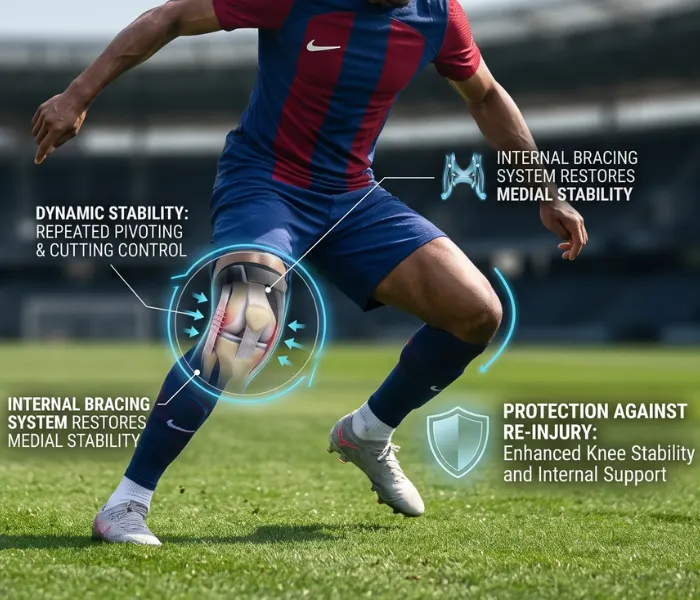
Successful return depends on:
- ✔ Severity of the original injury
- ✔ Type of surgery performed
- ✔ Healing of the ligament
- ✔ Muscle strength recovery
- ✔ Completion of rehabilitation
- ✔ Sport-specific readiness
Athletes involved in high-demand sports may require additional testing before returning to competition.
How Long Does It Take to Return to Sports After MCL Repair?
Recovery timelines vary depending on the severity of the injury and whether other knee structures are involved.
General Recovery Timeline:
| Recovery Phase | Expected Progress |
|---|---|
| First 2–6 weeks | Protection, controlled movement, reducing swelling |
| 6–12 weeks | Strengthening and improving knee function |
| 3–6 months | Running progression and sports-specific training |
| 6+ months | Advanced training and return to competitive sports |
Some athletes may return earlier, while complex injuries may require longer rehabilitation.
Factors That Decide When You Can Return to Sports
1. Knee Stability
The repaired MCL must provide adequate support during:
- Side movements
- Cutting movements
- Sudden changes in direction
A stable knee is essential before returning to competitive sports.
2. Muscle Strength
After surgery, muscles around the knee may become weaker. Important areas include:
- Quadriceps
- Hamstrings
- Hip muscles
Strength should be comparable to the uninjured leg before returning to high-intensity activities.
3. Full Range of Motion
Athletes should regain:
- ✔ Complete knee bending
- ✔ Complete knee straightening
Limited movement can affect performance and increase injury risk.
4. No Pain or Swelling
Before returning to sports:
- The knee should remain pain-free
- Training should not cause swelling
- Recovery after activity should be comfortable
Persistent swelling may indicate that the knee is not ready for full sports participation.
5. Functional Testing
Doctors and physiotherapists may assess:
Balance Testing
Evaluates knee control and stability.
Single-Leg Exercises
Checks strength, coordination, and movement control.
Hop Tests
Assess power, confidence, and leg symmetry.
Sport-Specific Drills
Athletes should demonstrate safe performance of sprinting, jumping, direction changes, and game-related movements.
Return-to-Play Criteria After MCL Repair
Before returning to sports, athletes should achieve:
Physical Criteria
- ✔ Full knee movement
- ✔ No swelling
- ✔ No ligament instability
- ✔ Good muscle strength
- ✔ Proper movement mechanics
Performance Criteria
- ✔ Ability to run without pain
- ✔ Ability to jump and land safely
- ✔ Ability to change direction confidently
- ✔ Completion of sport-specific drills
Psychological Readiness
Athletes should feel confident performing movements without fear of re-injury.
Returning to Different Types of Sports After MCL Repair
Running
Light jogging may begin during rehabilitation when approved by the treating team.
Progression usually includes:
- Straight-line running
- Faster running
- Sprint training
Football, Basketball & Other Contact Sports
These sports require cutting movements, sudden direction changes, and physical contact.
A longer rehabilitation period may be required before returning.
Cricket
Return depends on bowling demands, batting movements, and fielding requirements.
Athletes need adequate knee stability before competitive play.
Gym and Strength Training
Gradual strengthening is encouraged. However, athletes should avoid heavy squats too early, high-impact movements, or exercises causing pain.
What Happens If You Return Too Early?
Returning before the knee is fully ready may lead to:
- Re-injury
- Persistent instability
- Reduced athletic performance
- Additional ligament damage
A gradual return protects the repaired ligament and improves long-term outcomes.
Rehabilitation After MCL Repair
A structured rehabilitation program usually includes:
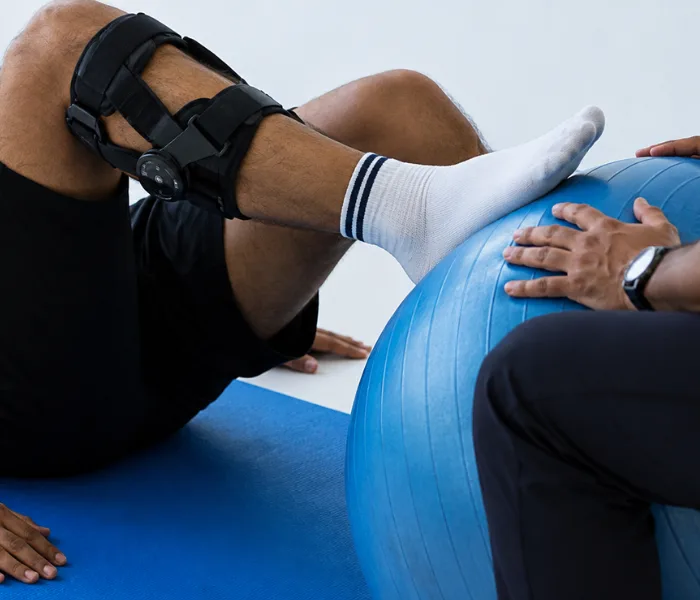
Early Rehabilitation
Goals: Reduce swelling, restore movement, protect ligament healing.
Strength Recovery Phase
Focuses on: Quadriceps strengthening, hamstring strengthening, balance training.
Sports Preparation Phase
Includes: Agility exercises, running drills, jump training, sport-specific movements.
Can You Return to Your Previous Performance Level?
Many athletes successfully return to their previous sports level after MCL repair.
The chances of successful return improve with:
- ✔ Early diagnosis
- ✔ Appropriate surgical management
- ✔ Dedicated rehabilitation
- ✔ Gradual progression
- ✔ Following return-to-play criteria
Each athlete's recovery journey is different and should be guided by their injury condition.
Why Choose Dr. Aditya Pawaskar for MCL Injury Treatment in Mumbai?
Dr. Aditya Pawaskar is a Consultant Arthroscopic Surgeon & Sports Injury Specialist.
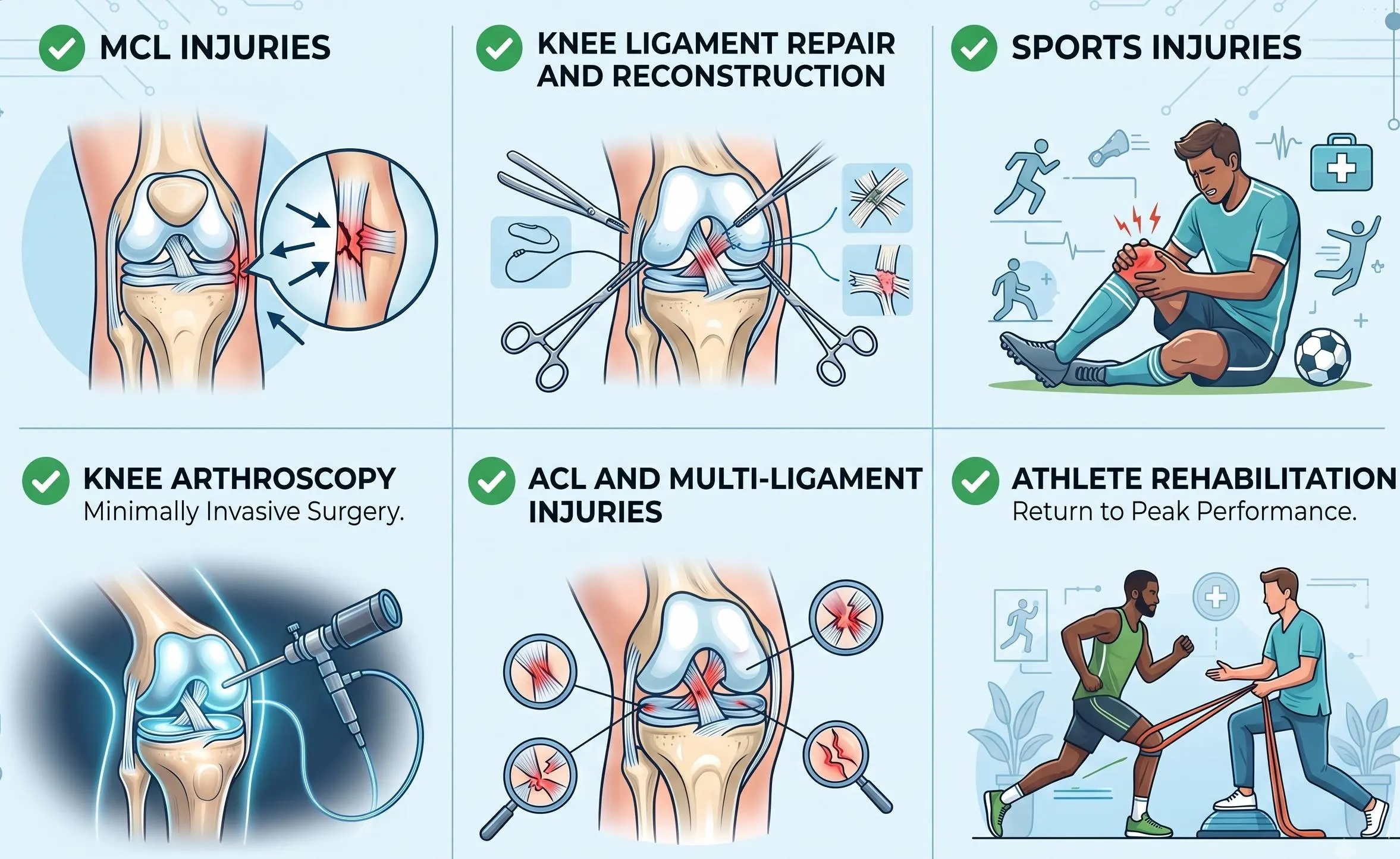
He specialises in:
- ✔ MCL injuries
- ✔ Knee ligament repair and reconstruction
- ✔ Sports injuries
- ✔ Knee arthroscopy
- ✔ ACL and multi-ligament injuries
- ✔ Athlete rehabilitation
His treatment approach focuses on accurate diagnosis, athlete-specific treatment planning, advanced surgical techniques, and safe return-to-sport protocols.
Consultation With Dr. Aditya Pawaskar
Consult a knee specialist if you experience:
- Knee instability after MCL injury
- Difficulty returning to sports
- Pain during running or jumping
- Repeated knee giving-way episodes
- Concerns about sports recovery after surgery
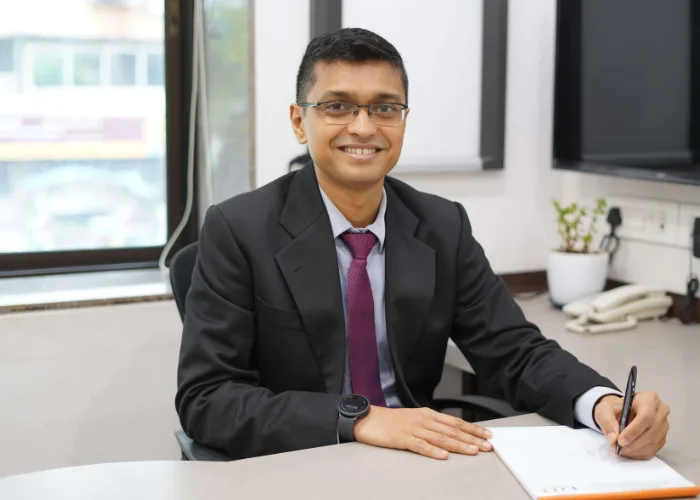
Dr. Aditya Pawaskar
Consultant Arthroscopic Surgeon & Sports Injury Specialist
Specialised Care For:
- MCL Repair Surgery
- Sports Injury Treatment
- Knee Ligament Injuries
- Arthroscopic Knee Surgery
📍 Consultation Locations:
Matunga Clinic, Mumbai | Apollo Spectra Hospitals, Tardeo, Mumbai
A detailed evaluation helps determine when your knee is ready for a safe return to sports.
Frequently Asked Questions (FAQs)
- 1. Can I play sports again after MCL repair?
Yes, many athletes return to sports after successful MCL repair and completion of rehabilitation. - 2. How long after MCL repair can I return to sports?
Many athletes return between 3–6 months, but the timeline depends on injury severity, healing, strength, and sport requirements. - 3. Will my knee be as strong after MCL repair?
With proper rehabilitation, many athletes regain excellent knee stability and function. - 4. Can I play contact sports after MCL surgery?
Yes, but athletes should return only after achieving strength, stability, and functional movement goals. - 5. What tests are done before returning to sports after MCL repair?
Doctors may assess knee stability, strength, balance, movement control, and sport-specific performance. - 6. Can an MCL tear happen again after repair?
Re-injury is possible, especially if athletes return too early or skip rehabilitation. Following recovery guidelines reduces risk.
Conclusion
An MCL tear does not necessarily mean the end of your sporting career.
With proper treatment, structured rehabilitation, and a criteria-based return-to-play approach, many athletes successfully return to their previous level of performance.
The key is allowing the ligament to heal fully and ensuring the knee has regained strength, stability, and confidence before returning to competition.
For expert guidance on MCL repair recovery and sports return, consult Dr. Aditya Pawaskar, Consultant Arthroscopic Surgeon and Sports Injury Specialist in Mumbai.

Dr. Aditya Pawaskar, MS (Orthopaedics)
- Specialist in Arthroscopy & Sports Injury, Mumbai
Visit: https://dradityapawaskar.com/