When Can I Resume Daily Activities After Shoulder Replacement?
Shoulder replacement surgery can significantly reduce pain and improve movement in patients suffering from severe shoulder arthritis, rotator cuff problems, fractures, or joint damage.
However, one of the most common questions patients ask after surgery is:
“When can I return to my normal daily activities after shoulder replacement?”
Recovery after shoulder replacement is a gradual process. While some patients notice improvement within a few weeks, complete recovery and return to functional activities may take several months.
The timeline depends on factors such as:
- Type of shoulder replacement performed
- Patient age and overall health
- Muscle strength before surgery
- Physiotherapy progress
- Surgical complexity
Dr. Aditya Pawaskar provides personalised rehabilitation guidance after shoulder replacement surgery to help patients safely regain shoulder function and return to daily activities.
Understanding Recovery After Shoulder Replacement Surgery
Shoulder replacement involves replacing damaged parts of the shoulder joint with artificial implants.
Depending on the condition, patients may undergo:
- Total shoulder replacement
- Reverse shoulder replacement
- Partial shoulder replacement (hemiarthroplasty)
Each procedure has a different recovery pattern.
The main goals after surgery are:
- ✔ Reduce pain
- ✔ Restore shoulder movement
- ✔ Improve strength
- ✔ Return to daily activities safely
Following a structured rehabilitation program plays an important role in achieving the best possible outcome.
Shoulder Replacement Recovery Timeline
First Few Days After Surgery
Immediately after shoulder replacement:
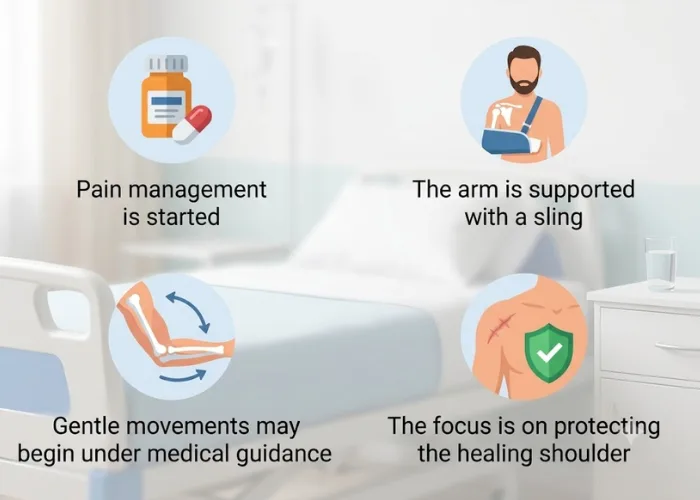
- Pain management is started
- The arm is supported with a sling
- Gentle movements may begin under medical guidance
- The focus is on protecting the healing shoulder
Patients are usually encouraged to start safe movements early to prevent stiffness.
2–6 Weeks After Shoulder Replacement
During this phase, patients gradually begin improving shoulder mobility.
You may be able to:
- ✔ Perform light personal activities
- ✔ Use your hand for eating and writing
- ✔ Dress with assistance initially
- ✔ Perform gentle prescribed exercises
However, patients should avoid:
- ❌ Lifting heavy objects
- ❌ Sudden shoulder movements
- ❌ Supporting body weight on the operated arm
Physiotherapy exercises are increased gradually based on recovery.
6–12 Weeks After Shoulder Replacement
Many patients experience noticeable improvement during this period.
You may gradually resume:
Daily Self-Care Activities
- Dressing independently
- Bathing
- Grooming
- Light household tasks
Office Work
Patients with desk-based jobs may often return to work depending on:
- Pain levels
- Shoulder mobility
- Work requirements
Driving
Driving is usually considered only when:
- Shoulder movement is adequate
- Pain is controlled
- The surgeon confirms it is safe
The exact timing varies between individuals.
3–6 Months After Shoulder Replacement
Most patients continue gaining strength and confidence during this stage.
Activities may include:
- ✔ More comfortable arm movement
- ✔ Improved shoulder function
- ✔ Increased independence in daily tasks
- ✔ Light recreational activities
Regular physiotherapy helps improve strength and movement.
6 Months and Beyond After Shoulder Replacement
Long-term recovery continues even after six months.
Many patients can return to:
- Normal household activities
- Walking and fitness routines
- Low-impact recreational activities
However, high-impact activities or heavy lifting may require restrictions depending on:
- Type of implant
- Shoulder condition
- Surgeon recommendations
When Can I Drive After Shoulder Replacement?
Driving after shoulder replacement depends on recovery progress.
Generally, patients may consider driving when:
- They are no longer dependent on strong pain medication
- Shoulder movement allows safe steering control
- They can comfortably react during driving situations
Your surgeon should confirm when it is safe to resume driving.
When Can I Return to Work After Shoulder Replacement?
The return-to-work timeline depends on the nature of your job.

Desk Job
Many patients may return within a few weeks if pain and mobility are controlled.
Physically Demanding Work
Jobs involving:
- Heavy lifting
- Overhead activities
- Manual labour
may require a longer recovery period.
Your surgeon will guide you based on your shoulder healing and job requirements.
Can I Exercise After Shoulder Replacement?
Yes, exercise is an important part of shoulder replacement recovery.
However, exercises should be introduced gradually.
Recommended activities may include:
- Range-of-motion exercises
- Strengthening exercises
- Physiotherapy-guided movements
Avoid exercises that place excessive stress on the shoulder unless approved by your doctor.
Activities to Avoid After Shoulder Replacement
To protect the implant and allow proper healing, avoid:
- Heavy Lifting
Avoid lifting heavy weights until your surgeon allows it. - Sudden Movements
Rapid pulling or jerking movements may strain healing tissues. - High-Impact Sports
Activities involving falls or shoulder impact may increase risk. - Ignoring Physiotherapy
Skipping rehabilitation may affect shoulder strength and movement.
Factors That Affect Recovery Speed
Recovery after shoulder replacement varies from person to person.
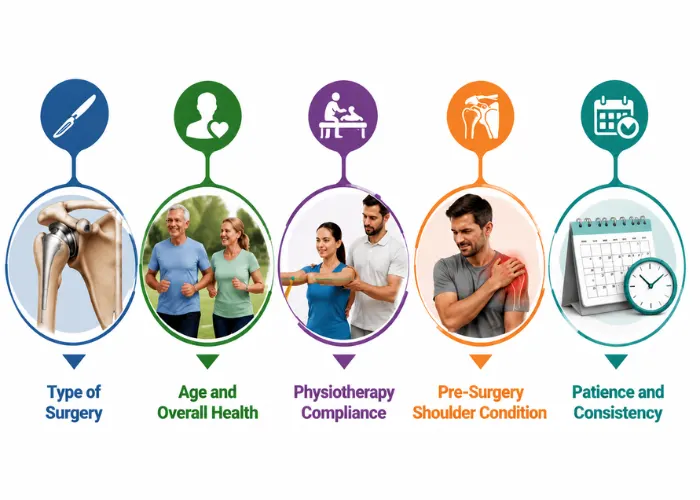
Important factors include:
- Type of Surgery
Reverse shoulder replacement may have a different rehabilitation pathway compared to total shoulder replacement. - Age and Overall Health
Medical conditions such as diabetes or poor muscle strength may influence recovery. - Physiotherapy Compliance
Regular exercises support better mobility and strength. - Pre-Surgery Shoulder Condition
Patients with long-standing stiffness or weakness may require more rehabilitation.
How Dr. Aditya Pawaskar Helps With Shoulder Replacement Recovery
Dr. Aditya Pawaskar is a Consultant Arthroscopic Surgeon and Sports Injury Specialist in Mumbai, specialising in shoulder and knee conditions.
His expertise includes:
- ✔ Shoulder replacement surgery
- ✔ Reverse shoulder arthroplasty
- ✔ Rotator cuff tear treatment
- ✔ Shoulder arthroscopy
- ✔ Sports-related shoulder injuries
During consultation, Dr. Pawaskar evaluates:
- Shoulder condition
- Imaging reports
- Movement limitations
- Functional goals
and creates an individualised treatment and recovery plan.
Consultation With Dr. Aditya Pawaskar
If you have undergone or are considering shoulder replacement surgery and want guidance regarding recovery, rehabilitation, and returning to daily activities, consult:
Dr. Aditya Pawaskar
Consultant Arthroscopic Surgeon & Sports Injury Specialist
Specialised Care For:
- Shoulder replacement
- Reverse shoulder replacement
- Rotator cuff injuries
- Shoulder arthritis
- Sports injuries
Consultation Location:
- 📍 Matunga Clinic, Mumbai
- 📍 Apollo Spectra Hospitals, Tardeo, Mumbai
Frequently Asked Questions (FAQs)
- 1. How long does it take to recover after shoulder replacement?
Most patients improve significantly within 3–6 months, although strength and function may continue improving for up to a year. - 2. When can I start daily activities after shoulder replacement?
Many patients can perform light daily activities within 6–12 weeks, depending on healing and rehabilitation progress. - 3. Can I drive after shoulder replacement surgery?
Driving is usually resumed after adequate shoulder movement, pain control, and surgeon approval. - 4. When can I lift weights after shoulder replacement?
Heavy lifting should be avoided until your surgeon confirms that the shoulder has healed sufficiently. - 5. Can I sleep normally after shoulder replacement?
Most patients gradually return to comfortable sleeping positions as pain reduces and healing progresses. - 6. Is physiotherapy necessary after shoulder replacement?
Yes. Physiotherapy is essential for improving shoulder movement, strength, and long-term function.
Conclusion
Returning to daily activities after shoulder replacement is a gradual journey that depends on healing, rehabilitation, and individual recovery goals.
Most patients can resume light activities within weeks and continue improving shoulder function over several months.
Following your surgeon’s advice and completing physiotherapy can help achieve a safer and more successful recovery.
For personalised guidance after shoulder replacement surgery, consult Dr. Aditya Pawaskar, Consultant Arthroscopic Surgeon and Sports Injury Specialist in Mumbai.

Dr. Aditya Pawaskar, MS (Orthopaedics)
- Specialist in Arthroscopy & Sports Injury, Mumbai
Visit: https://dradityapawaskar.com/