Symptoms & Early Signs of an MCL (Medial Collateral Ligament) Injury
The knee joint depends on multiple ligaments to maintain stability during walking, running, jumping, and sports activities.
One of the important stabilising structures on the inner side of the knee is the Medial Collateral Ligament (MCL).
An MCL injury can occur suddenly during sports, falls, or twisting movements. It may cause pain, swelling, and difficulty putting weight on the affected leg.
Recognising the early signs of an MCL injury is important because timely diagnosis and appropriate treatment can prevent long-term knee instability.
Many mild MCL injuries improve with conservative treatment, while severe tears may require specialised management.
Dr. Aditya Pawaskar, Consultant Arthroscopic Surgeon and Sports Injury Specialist in Mumbai, provides evaluation and treatment for knee ligament injuries, including MCL injuries.
What Is an MCL Injury?
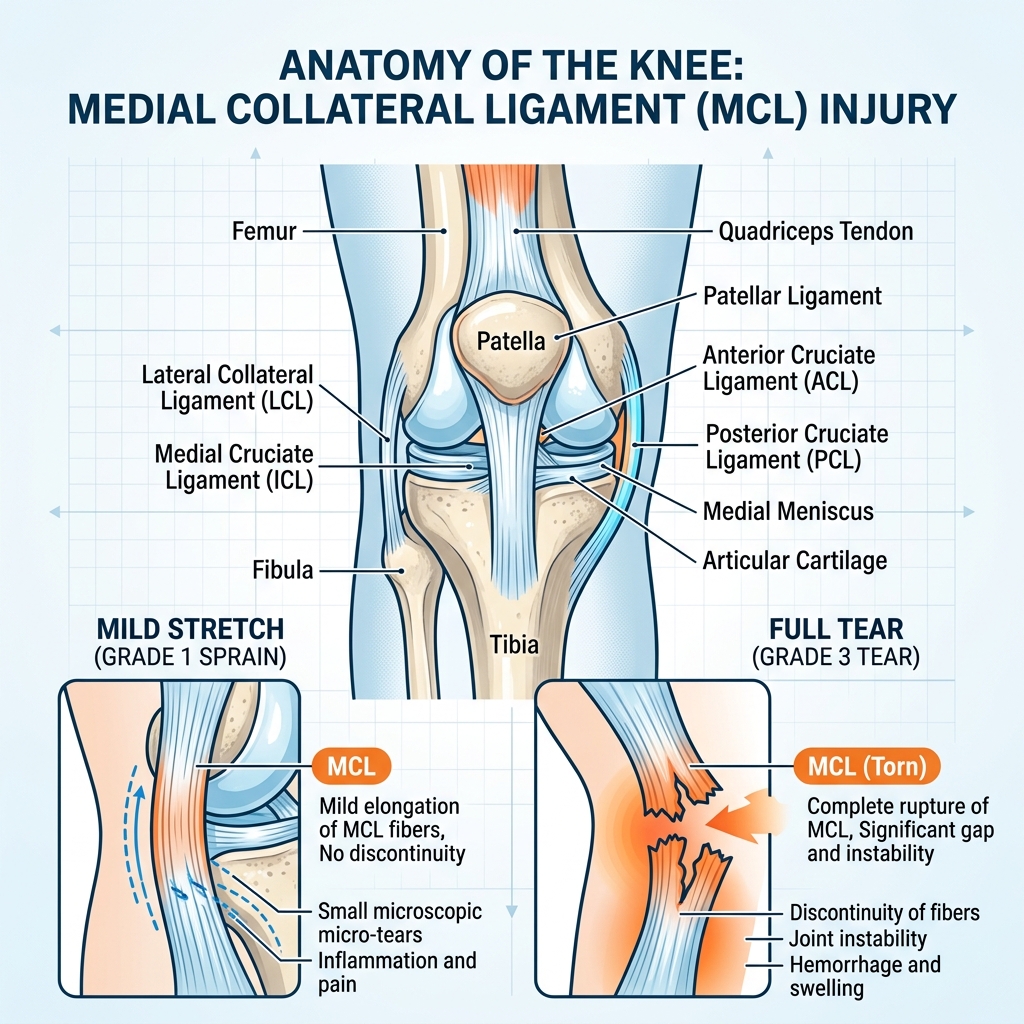
The Medial Collateral Ligament (MCL) is a strong band of tissue located on the inner side of the knee.
It connects:
- The femur (thigh bone)
- The tibia (shin bone)
Its main functions are:
- ✔ Providing stability to the inner side of the knee
- ✔ Preventing excessive inward movement of the knee
- ✔ Supporting movements during sports and daily activities
An MCL injury occurs when this ligament is stretched, partially torn, or completely torn.
What Causes an MCL Injury?
MCL injuries commonly occur due to stress placed on the outside of the knee, forcing the knee inward.
Common causes include:
Sports Injuries
Activities involving sudden direction changes or contact may increase the risk.
Examples:
- Football
- Basketball
- Skiing
- Wrestling
- Cricket
Sudden Twisting Movements
A quick pivot or change in direction can strain the ligament.
Direct Impact to the Knee
A blow to the outer side of the knee can stretch or tear the MCL.
Falls or Accidents
Trauma during falls may damage knee ligaments.
Early Signs and Symptoms of MCL Injury
Symptoms depend on the severity of the ligament damage.
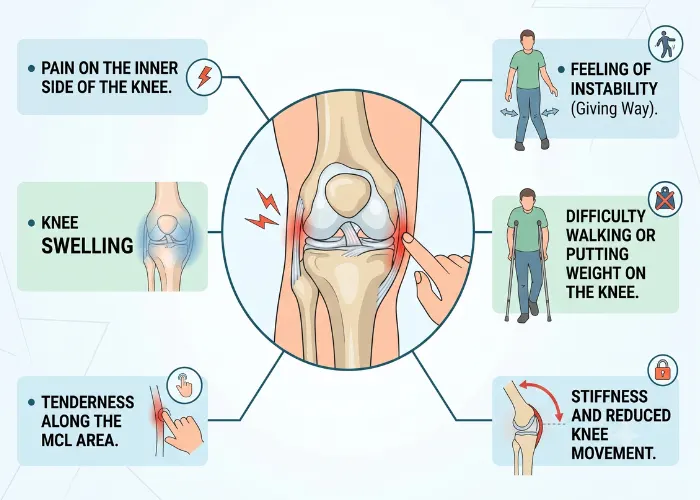
1. Pain on the Inner Side of the Knee
One of the most common early signs of an MCL injury is pain along the inside of the knee.
The pain may become worse with:
- Walking
- Bending the knee
- Climbing stairs
- Side movements
2. Knee Swelling
Swelling may develop after the injury due to inflammation around the damaged ligament.
Some patients notice swelling immediately, while others develop it gradually.
3. Tenderness Along the MCL Area
Pressing the inner side of the knee may cause discomfort or tenderness.
This tenderness often helps doctors identify the location of the injury.
4. Feeling of Knee Instability
Some patients describe:
- The knee feeling weak
- A sensation that the knee may give way
- Difficulty during side-to-side movements
This occurs because the injured ligament cannot provide normal stability.
5. Difficulty Walking or Putting Weight on the Knee
Depending on the severity of injury, patients may experience discomfort while:
- Standing
- Walking
- Running
- Using stairs
6. Stiffness and Reduced Knee Movement
Inflammation and pain can restrict normal knee motion.
Patients may find it difficult to:
- Fully bend the knee
- Straighten the knee completely
Grades of MCL Injury
MCL injuries are classified into three grades:
Grade 1 MCL Injury (Mild Sprain)
The ligament is stretched but not significantly torn.
Symptoms may include:
- Mild pain
- Slight tenderness
- Minimal swelling
- Stable knee movement
Recovery is usually faster with proper care.
Grade 2 MCL Injury (Partial Tear)
The ligament is partially torn.
Symptoms may include:
- Moderate pain
- Increased tenderness
- Swelling
- Some knee instability
Treatment may require longer rehabilitation.
Grade 3 MCL Injury (Complete Tear)
The ligament is completely torn.
Symptoms may include:
- Severe pain
- Significant instability
- Difficulty walking
- Feeling of the knee giving way
Some patients may require surgical evaluation, especially if other knee structures are injured.
How Is an MCL Injury Diagnosed?
A proper diagnosis helps determine the severity of the injury.
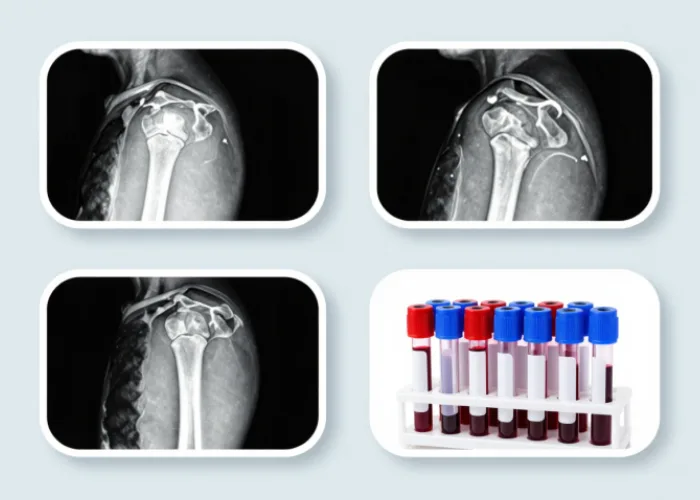
During consultation, the doctor may perform:
Physical Examination
The knee is assessed for:
- Tenderness
- Stability
- Range of motion
- Ligament function
MRI Scan
MRI helps evaluate:
- MCL damage
- Associated ligament injuries
- Cartilage or meniscus problems
X-Ray
X-rays may be recommended to rule out fractures or bone-related injuries.
Treatment Options for MCL Injury
Treatment depends on:
- Injury grade
- Patient activity level
- Associated knee damage
Non-Surgical Treatment
Many MCL injuries improve with:
Rest and Activity Modification
Avoiding movements that increase pain allows healing.
Ice Therapy
Helps reduce swelling and inflammation.
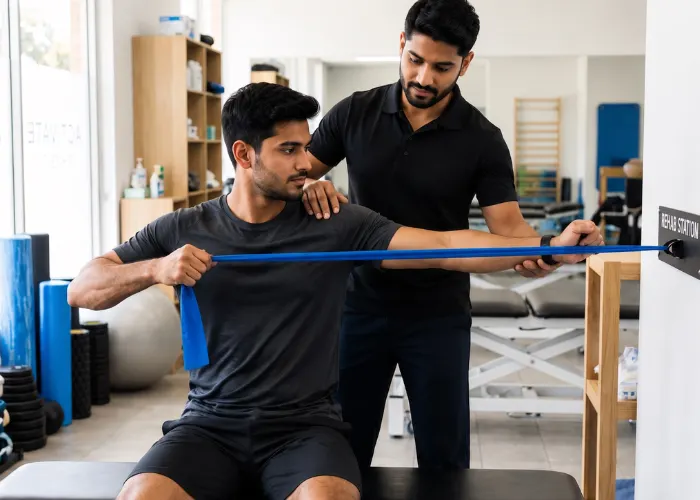
Physiotherapy
Exercises focus on:
- Restoring knee movement
- Improving muscle strength
- Enhancing stability
Knee Support
A brace may be recommended in some cases.
When Is Surgery Considered for MCL Injury?
Most isolated MCL injuries do not require surgery.
Surgical treatment may be considered when:
- There is a complete ligament tear
- The knee remains unstable
- Multiple ligaments are injured
- Conservative treatment does not improve symptoms
A detailed assessment helps determine the most appropriate treatment.
How Long Does an MCL Injury Take to Heal?
Recovery depends on the severity of the injury.
Approximate recovery timeline:
| Injury Grade | Recovery Time |
|---|---|
| Grade 1 | 1–3 weeks |
| Grade 2 | 4–8 weeks |
| Grade 3 | Several months |
The timeline may vary depending on rehabilitation, associated injuries, and patient activity levels.
Can You Prevent MCL Injuries?
You can reduce the risk by:
- ✔ Warming up before sports
- ✔ Strengthening thigh muscles
- ✔ Improving flexibility
- ✔ Using proper sports techniques
- ✔ Avoiding sudden increases in training intensity
Why Choose Dr. Aditya Pawaskar for MCL Injury Treatment in Mumbai?

Dr. Aditya Pawaskar is a Consultant Arthroscopic Surgeon and Sports Injury Specialist in Mumbai specialising in knee and shoulder conditions.
His expertise includes:
- ✔ MCL and ligament injury management
- ✔ Knee arthroscopy
- ✔ Sports injuries
- ✔ Meniscus injuries
- ✔ ACL and ligament reconstruction
- ✔ Knee pain evaluation
He uses detailed clinical assessment and advanced imaging guidance to create personalised treatment plans.
Consultation With Dr. Aditya Pawaskar
If you experience:

Dr. Aditya Pawaskar
Consultant Arthroscopic Surgeon & Sports Injury Specialist
Specialised Care For:
- Knee Ligament Injuries
- Sports Injuries
- Arthroscopy
- Knee Rehabilitation
- Inner knee pain after injury
- Knee swelling
- Instability while walking
- Difficulty returning to sports
- A popping sensation during injury
consult:
📍 Consultation Locations:
Matunga Clinic, Mumbai
Apollo Spectra Hospitals, Tardeo, Mumbai
Early evaluation can help prevent worsening of ligament damage and support faster recovery.
Frequently Asked Questions (FAQs)
- 1. What are the first signs of an MCL injury?
Early signs include inner knee pain, tenderness, swelling, stiffness, and difficulty with walking or side movements. - 2. Can an MCL injury heal without surgery?
Yes, most MCL injuries, especially Grade 1 and Grade 2 injuries, improve with rest, physiotherapy, and rehabilitation. - 3. How long does an MCL tear take to heal?
Recovery depends on injury severity. Mild injuries may heal within weeks, while complete tears may require several months. - 4. Where does MCL injury pain occur?
MCL injury pain is usually felt on the inner side of the knee where the ligament is located. - 5. Does an MCL injury require an MRI?
MRI may be recommended to assess the extent of ligament damage and check for associated injuries. - 6. Can I walk with an MCL tear?
Some patients can walk with mild injuries, while severe tears may make walking painful or unstable.
Conclusion
An MCL injury can range from a mild sprain to a complete ligament tear. Recognising symptoms like inner knee pain, swelling, tenderness, and instability can help with early diagnosis and treatment.
Most MCL injuries recover well with appropriate care and rehabilitation. However, severe injuries require specialist evaluation to prevent long-term knee instability.
For expert evaluation and personalised treatment of knee ligament injuries, consult Dr. Aditya Pawaskar, Consultant Arthroscopic Surgeon and Sports Injury Specialist in Mumbai.

Dr. Aditya Pawaskar, MS (Orthopaedics)
- Specialist in Arthroscopy & Sports Injury, Mumbai
Visit: https://dradityapawaskar.com/