Step-by-Step Guide to MCL Tear Repair Surgery
A Medial Collateral Ligament (MCL) tear is one of the most frequent knee ligament conditions treated among common sports injuries in athletes and active individuals.
While many MCL injuries improve with conservative treatment such as physiotherapy, bracing, and activity modification, some severe injuries may require MCL tear repair surgery to restore knee stability.
Patients considering surgery often have questions like:
“How is MCL tear repair surgery performed?”
“What happens before, during, and after the procedure?”
Understanding the surgical process can help patients feel more prepared and make informed treatment decisions.
Dr. Aditya Pawaskar, Consultant Arthroscopic Surgeon and Sports Injury Specialist in Mumbai, provides specialised evaluation and treatment for knee ligament injuries, including complex MCL tears.
What Is MCL Tear Repair Surgery?
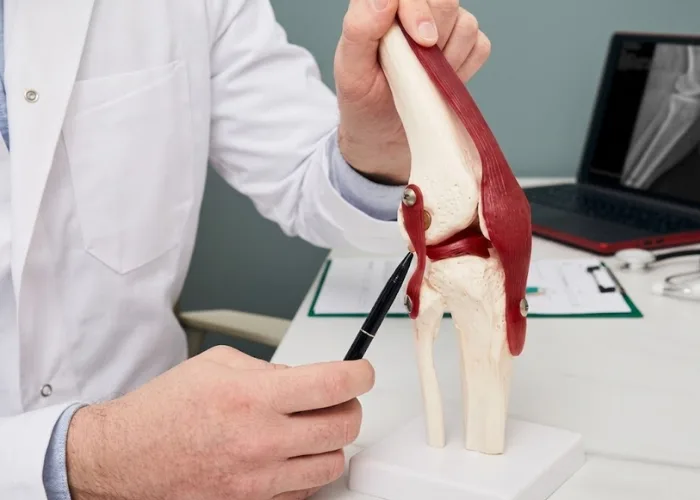
MCL tear repair surgery is a procedure performed to restore stability when the medial collateral ligament is severely damaged and cannot heal properly with non-surgical treatment.
The goal of surgery is to:
- ✔ Restore knee stability
- ✔ Repair or reconstruct the damaged ligament
- ✔ Reduce instability symptoms
- ✔ Help patients return to daily activities and sports
Depending on the injury pattern, surgery may involve:
- MCL Repair: Fixing the damaged native ligament
- MCL Reconstruction: Rebuilding the ligament using a graft
The choice depends on the severity, location, and timing of the injury.
When Is MCL Tear Repair Surgery Recommended?
Most isolated MCL injuries do not require surgery.
However, surgery may be considered when:
Complete MCL Tear (Grade 3 Injury)
A complete rupture may cause significant knee instability.
Persistent Knee Instability
If the knee continues to feel unstable despite rehabilitation.
Combined Ligament Injuries
MCL tears associated with:
- ACL injury
- PCL injury
- Other knee ligament damage
may require surgical management.
Failed Conservative Treatment
When physiotherapy and bracing do not improve symptoms.
High-Level Athletes
Competitive athletes may require surgery to safely return to demanding sports.
Step 1: Detailed Evaluation Before Surgery
The first step is an accurate diagnosis.
Diagnostic tests and evaluation during consultation include:
Consultation Evaluation
Dr. Aditya Pawaskar Evaluates:
- Knee pain symptoms
- Injury mechanism
- Knee stability
- Range of motion
- Activity requirements
MRI Scan
MRI Helps Assess:
- MCL tear severity
- Ligament location
- Associated meniscus tear or ligament injuries
X-Ray
Used to Evaluate:
- Bone injuries
- Alignment problems
Physical Examination
The Knee is Tested For:
- Stability
- Tenderness
- Movement limitations
Step 2: Surgical Planning
Before surgery, the treatment approach is planned based on:
- Type of MCL injury
- Duration since injury
- Patient age
- Sports or activity goals
- Associated injuries
The surgeon decides whether:
- Direct ligament repair is possible
- Reconstruction is required
Step 3: Anaesthesia and Surgical Preparation
On the day of surgery:
- The patient is admitted and prepared
- Anaesthesia is administered
- The surgical area is cleaned and prepared
The procedure is performed under sterile operating conditions.
Step 4: MCL Tear Repair Procedure
The surgical technique depends on the injury pattern.
MCL Repair
During repair:
- The torn ligament is identified
- Damaged tissue is repaired
- The ligament is reattached to its original position using specialised techniques
Repair is usually considered when the ligament tissue quality is suitable.
MCL Reconstruction
When the ligament cannot be repaired effectively, reconstruction may be performed.
During reconstruction:
- A graft is selected
- The graft is positioned to recreate the MCL
- Fixation devices secure the new ligament
The reconstructed ligament restores stability on the inner side of the knee.
Step 5: Closure and Post-Surgery Care
After completing the repair or reconstruction:
- Surgical incisions are closed
- Dressing is applied
- The knee may be supported with a brace
The patient is monitored during the initial recovery period.
How Long Does MCL Tear Repair Surgery Take?
The duration depends on:
- Severity of injury
- Repair versus reconstruction
- Presence of additional ligament injuries
Generally, the procedure may take approximately:
1–3 hours
Complex multi-ligament injuries may require additional time.
Recovery After MCL Tear Repair Surgery
Recovery is a gradual, structured process involving protection, mobility training, and strengthening.
First Few Weeks
The Focus Is On:
- Pain control
- Reducing swelling
- Protecting ligament healing
- Controlled knee movement
Patients May Use:
- Knee brace
- Walking support
- Prescribed exercises
6 Weeks to 3 Months
Rehabilitation Focuses On:
- Improving knee movement
- Strengthening thigh muscles
- Improving balance
- Restoring walking ability
3–6 Months
Progress Towards:
- Functional activities
- Running progression
- Strength training
- Sport-specific exercises
Return Depends On:
- Knee stability
- Strength recovery
- Functional testing results
6 Months & Beyond
Many athletes continue advanced rehabilitation before returning to competitive sports.
The Goal Is:
- Stable knee
- Strong muscles
- Confidence during movement
- Reduced risk of re-injury
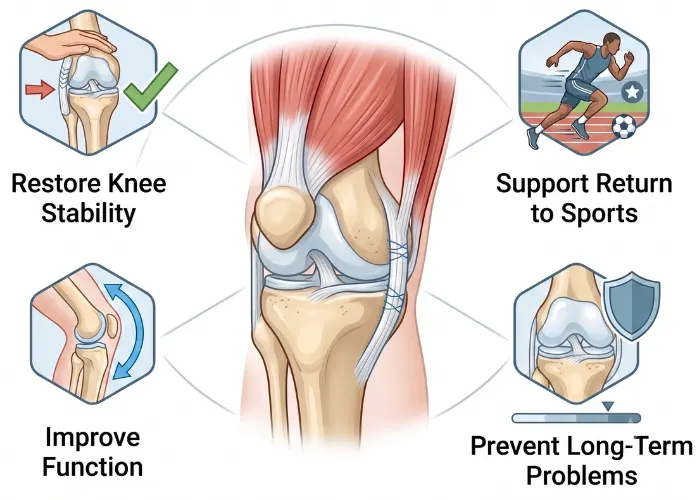
Benefits of MCL Tear Repair Surgery
Successful surgery can help:
Restore Knee Stability
Helps reduce the feeling of the knee giving way.
Improve Function
Patients may regain better ability for:
- Walking
- Exercise
- Sports activities
Support Return to Sports
Athletes may return to competitive activity after completing rehabilitation.
Prevent Long-Term Problems
Untreated instability may increase stress on other knee structures.
Risks and Possible Complications
Like any surgical procedure, MCL repair surgery may have potential risks, including:
- Infection
- Stiffness
- Persistent instability
- Blood clot formation
- Delayed recovery
Following post-operative instructions and rehabilitation guidance helps reduce risks.
MCL Repair Surgery vs Non-Surgical Treatment
| Factor | Non-Surgical Treatment | MCL Repair Surgery |
|---|---|---|
| Suitable For | Mild to moderate tears | Severe tears and instability |
| Treatment | Physiotherapy, brace, rest | Ligament repair/reconstruction |
| Recovery | Usually shorter | Longer rehabilitation |
| Sports Return | Depends on healing | Structured return after stability restoration |
Can Athletes Return to Sports After MCL Surgery?
Yes.
Many athletes return to sports after successful rehabilitation.
Before returning, athletes should achieve:
Full knee movement
No swelling
Adequate muscle strength
Good balance and coordination
Successful sports-specific testing
Returning too early can increase the risk of re-injury.
Why Choose Dr. Aditya Pawaskar for MCL Tear Treatment in Mumbai?
Dr. Aditya Pawaskar is a:
Consultant Arthroscopic Surgeon & Sports Injury Specialist
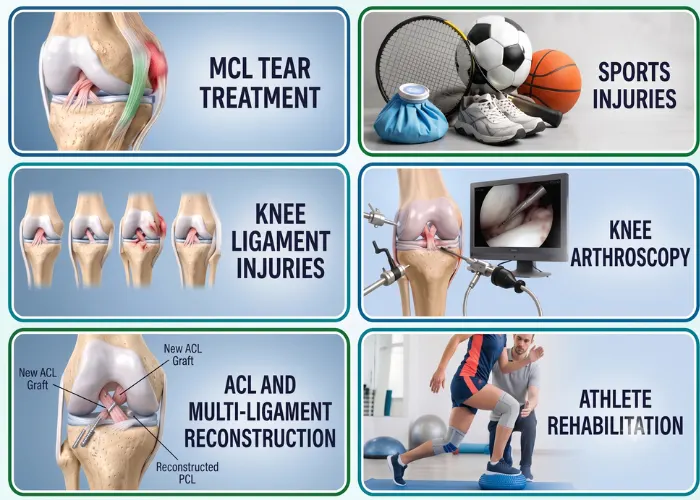
He specialises in comprehensive knee and shoulder care, including:
- ✔ MCL tear treatment & knee arthroscopy
- ✔ ACL reconstruction and multi-ligament repair
- ✔ Advanced shoulder arthroscopy & shoulder replacement
- ✔ Athlete rehabilitation across sports such as cricket, tennis, and marathon running
His approach focuses on:
- Accurate diagnosis
- Individualised treatment planning
- Advanced surgical techniques
- Structured recovery protocols
Consultation With Dr. Aditya Pawaskar
Consultation is recommended if you experience:
- Knee instability after injury
- Inner knee pain
- Difficulty returning to sports
- Repeated knee giving-way episodes
- Persistent symptoms despite physiotherapy

Dr. Aditya Pawaskar
Consultant Arthroscopic Surgeon & Sports Injury Specialist
Specialised Care For:
- MCL Tear Repair Surgery
- Knee Ligament Injuries
- Sports Injury Management
- Arthroscopic Knee Surgery
📍 Consultation Locations:
Matunga Clinic, Mumbai
Apollo Spectra Hospitals, Tardeo, Mumbai
A detailed evaluation helps determine whether surgery or non-surgical treatment is appropriate.
Frequently Asked Questions (FAQs)
- 1. Does every MCL tear require surgery?
No. Most MCL tears heal with conservative treatment. Surgery is usually considered for complete tears, persistent instability, or combined ligament injuries. - 2. How long does MCL tear repair surgery take?
The procedure usually takes around 1–3 hours depending on the complexity of the injury. - 3. How long does recovery take after MCL repair surgery?
Recovery varies, but many patients require several months of rehabilitation before returning to high-demand activities. - 4. Can athletes return to sports after MCL surgery?
Yes. Athletes can return after achieving adequate strength, stability, and sport-specific performance goals. - 5. Is MCL repair surgery painful?
Some discomfort is expected after surgery, but pain is managed through medication, rehabilitation, and gradual recovery. - 6. What is the difference between MCL repair and MCL reconstruction?
MCL repair fixes the existing damaged ligament, while reconstruction rebuilds the ligament using a graft when repair is not possible.
Conclusion
MCL tear repair surgery is an effective option for patients with severe ligament damage, persistent instability, or combined knee injuries.
The success of treatment depends on accurate diagnosis, appropriate surgical planning, and dedicated rehabilitation.
A personalised evaluation helps determine whether MCL repair, reconstruction, or non-surgical treatment is the right approach.
For expert evaluation and treatment of MCL injuries, consult Dr. Aditya Pawaskar, Consultant Arthroscopic Surgeon and Sports Injury Specialist in Mumbai.

Dr. Aditya Pawaskar, MS (Orthopaedics)
- Specialist in Arthroscopy & Sports Injury, Mumbai
Visit: https://dradityapawaskar.com/