Shoulder Arthroscopy Recovery Timeline: What to Expect After Surgery
Introduction
How soon can you sleep comfortably, return to work, or lift your arm after shoulder arthroscopy? The answer depends on what your surgeon treated. A minor procedure may allow light activity within days, while a rotator cuff or labral repair can require months of recovery. Knowing each stage helps you plan daily tasks and protect healing tissues.
Shoulder Arthroscopy Recovery Timeline
The procedure uses a small camera and instruments to treat shoulder problems. Small incisions do not guarantee quick recovery because deeper tissues need time to heal.
| Recovery Stage | What You May Expect |
|---|---|
| Days 1–3 | Manage pain and swelling, protect the shoulder, and rest. |
| Weeks 1–6 | Use a sling if prescribed and perform only approved movements. |
| Weeks 6–12 | Gradually improve movement and begin selected exercises when cleared. |
| Months 3–6 | Build strength and resume more demanding activities in stages. |
| Beyond 6 months | Continue rehabilitation if strength, motion, or sport readiness is incomplete. |
Minor procedures may progress faster, while complex repairs can take longer.
How the Type of Surgery Changes Recovery
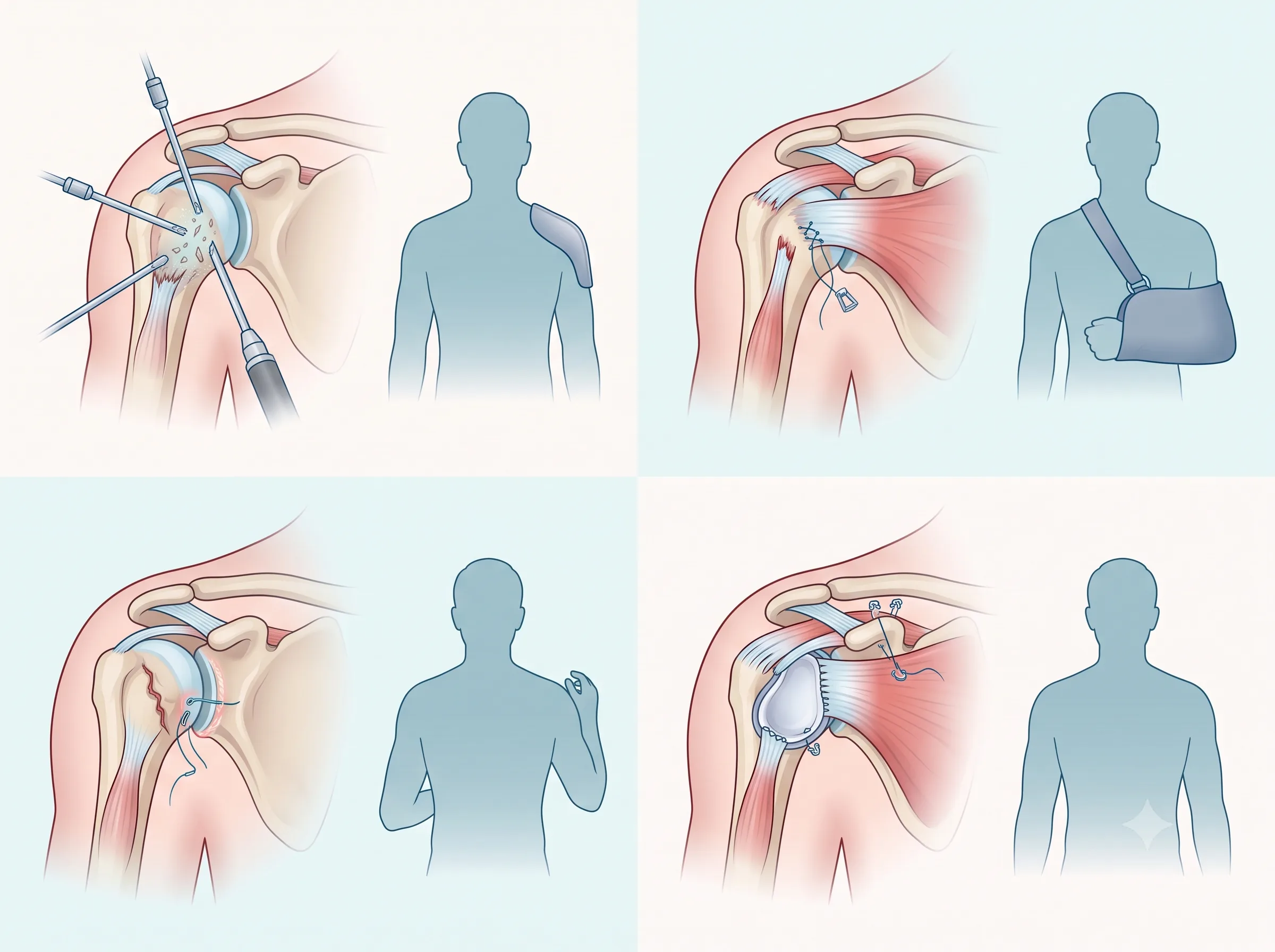
Not every shoulder arthroscopy procedure follows the same timetable.
- Debridement: Removing damaged tissue without reattaching a tendon may allow earlier shoulder movement and a quicker return to light duties.
- Rotator cuff repair: The repaired tendon must heal to bone. Your surgeon may limit movement and lifting for several weeks.
- Labral or Bankart repair: A repaired labrum helps keep the shoulder stable. Early restrictions protect it from positions that could strain the repair.
- Combined or large repairs: Additional procedures or poor tissue quality may require a slower programme.
Ask which structures were repaired.
First 72 Hours: Pain, Sleep, and Wound Care
Pain, swelling, and poor sleep are common. Discomfort may increase as a nerve block wears off.
- Take prescribed medicines as directed, ideally before pain becomes hard to control.
- Use a wrapped cold pack for short periods if your care team recommends it.
- Rest in a reclined position or support your arm with pillows if lying flat hurts.
- Keep dressings dry and follow your discharge instructions for showering.
- Arrange help with dressing, cooking, and travelling home.
Avoid lifting just to test your arm. Less pain does not mean a repair can tolerate weight.
Weeks 1-6: Protect the Repair
This stage often focuses on healing rather than rebuilding strength. After some rotator cuff or labral repairs, a sling may be prescribed for two to six weeks. Larger tears sometimes need longer protection. Other procedures may require little sling use.
Your plan may allow hand, wrist, and elbow exercises. Some patients start passive movement, where a therapist supports the arm. Others must delay shoulder movement.
Do not lift shopping bags, push yourself out of a chair with that arm, or start overhead stretches without clearance. Your shoulder arthroscopy recovery instructions should state exactly which movements are permitted.
Weeks 6-12: Restore Movement Gradually
Your therapist may progress from passive movement to active-assisted movement, where you help lift the arm, and then active movement, where you use the shoulder muscles independently. The timing varies by procedure.
Goals include improving movement and reducing stiffness. Some patients begin light strengthening, while others must wait.
Months 3-6 and Beyond: Return to Work, Gym, and Sport

As the repaired tissues mature, physiotherapy may add resistance exercises and work-specific or sport-specific movements.
- Desk work: Modified duties may be possible within days or weeks if pain and sling use allow.
- Manual work: Heavy lifting, pushing, and overhead tasks often need several months and surgeon approval.
- Gym and swimming: Restart with approved movements. Avoid testing strength with heavy weights.
- Throwing and contact sports: Return may take six months or longer, depending on the repair and your progress.
Track pain, sleep, and difficult movements. Contact your shoulder arthroscopy surgeon in Mumbai for fever, worsening redness, wound discharge, persistent numbness, or increasing pain.
When Should You Consult a Shoulder Specialist?
If you are considering shoulder arthroscopy in Mumbai, ask what procedure is planned, how long you may need a sling, and when you can return to work. A shoulder arthroscopy surgeon can explain repair-specific limits. If your pain, weakness, or stiffness persists after surgery, an arthroscopy specialist or orthopedic surgeon in Mumbai can reassess your shoulder and rehabilitation plan.
Frequently Asked Questions
Conclusion
Recovery after shoulder arthroscopy is not one fixed schedule. The operation performed, tissue healing, and your rehabilitation progress shape each stage. Protect your repair, follow approved exercises, and attend reviews to regain everyday function. Consulting an experienced shoulder arthroscopy specialist can help you recover safely and return to the activities you enjoy.
Dr. Aditya Pawaskar, MS (Orthopaedics)
Specialist in Arthroscopy & Sports Injury, Mumbai