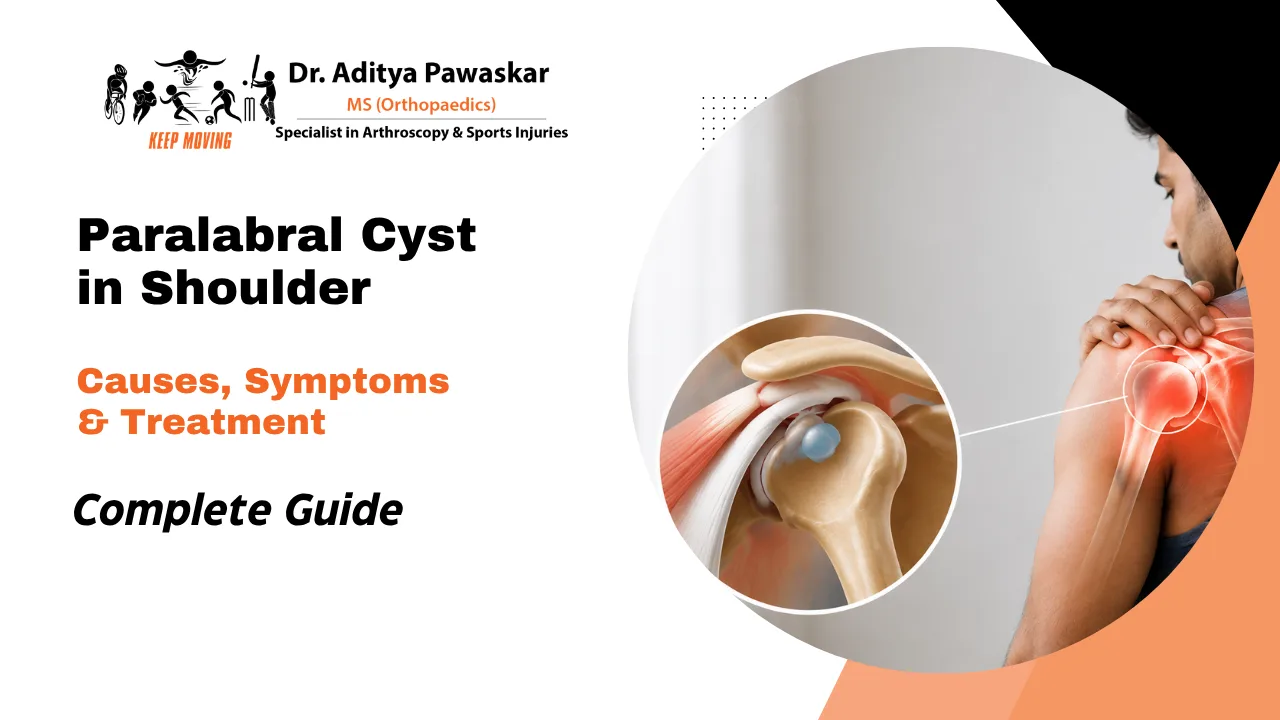
Paralabral Cyst in Shoulder: Causes, Symptoms, Diagnosis and Treatment Options
Shoulder pain, weakness, or difficulty moving your arm can sometimes be caused by problems inside the shoulder joint that are not visible from the outside. One such condition is a paralabral cyst in the shoulder, a fluid-filled cyst that develops near the shoulder labrum due to a tear or injury.
Although some paralabral cysts may not cause symptoms, others can lead to persistent shoulder pain, weakness, instability, or nerve-related problems. Early diagnosis and appropriate treatment can help prevent worsening symptoms and restore shoulder function.
If you are experiencing ongoing shoulder pain or weakness, consulting a shoulder specialist can help identify the exact cause and guide the right treatment approach. Dr. Aditya Pawaskar is a Consultant Arthroscopic Surgeon and Sports Injury Specialist in Mumbai, specialising in shoulder and knee arthroscopic procedures.
What Is a Paralabral Cyst in the Shoulder?
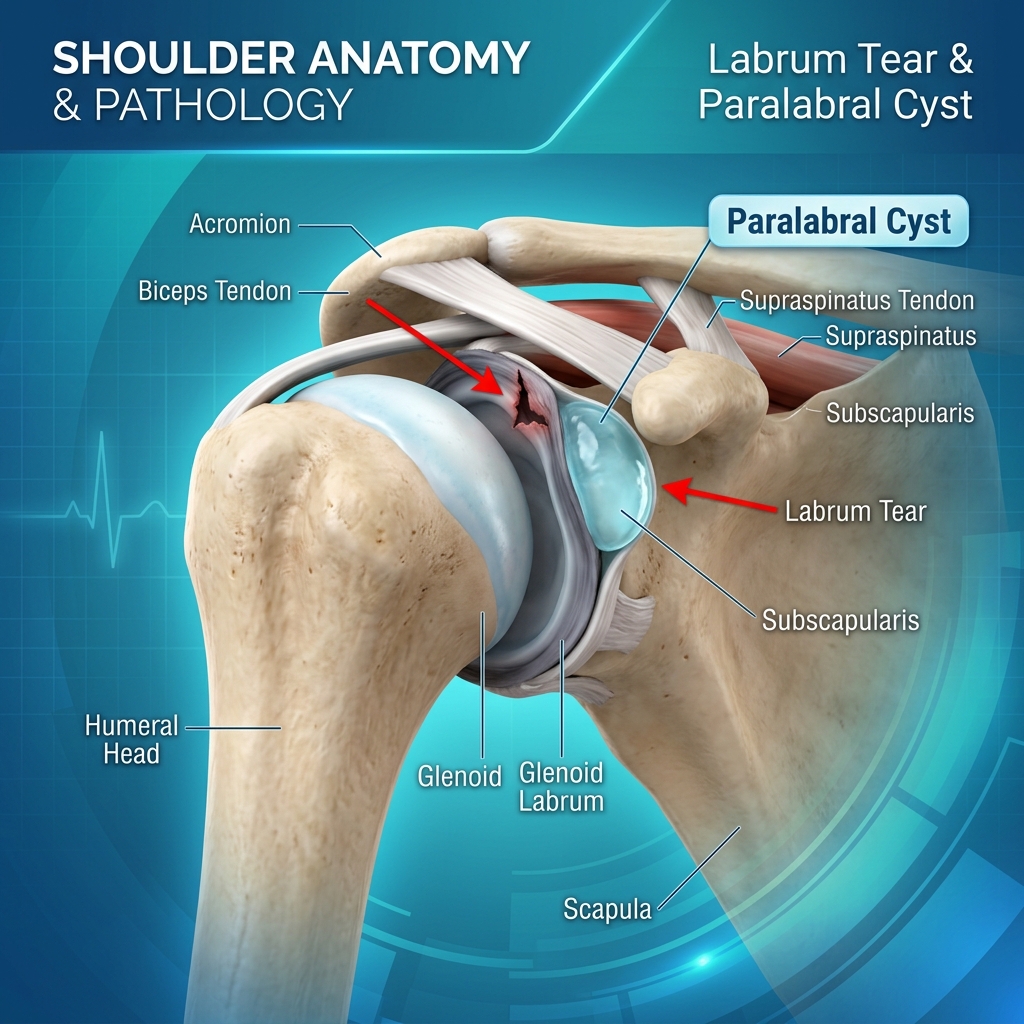
A paralabral cyst in the shoulder is a fluid-filled swelling that forms next to the shoulder labrum.
The labrum is a ring of cartilage surrounding the shoulder socket (glenoid). It helps stabilise the shoulder joint and allows smooth movement.
When the labrum develops a tear, joint fluid can leak through the damaged area and collect around the labrum, forming a cyst. This condition is commonly associated with injuries such as SLAP tears (Superior Labrum Anterior to Posterior tears) or other types of labral damage.
A paralabral cyst may remain small and symptom-free, but larger cysts can compress nearby nerves and affect shoulder movement.
What Causes a Paralabral Cyst in the Shoulder?
Several factors can contribute to the development of a shoulder paralabral cyst, including:
Shoulder Labral Tears
The most common cause of paralabral cyst formation is a tear in the shoulder labrum.
Labral injuries may occur due to:
Repetitive Shoulder Stress
Activities requiring repeated overhead movement can gradually damage the labrum.
Common examples include:
Shoulder Instability
Repeated shoulder dislocations or instability can damage the labrum and increase the chances of cyst formation.
Symptoms of Paralabral Cyst in Shoulder
Symptoms can vary depending on the size and location of the cyst. Common symptoms include:

Shoulder Pain
Pain May Occur During:
- Raising the arm
- Rotational movements
- Sports activities
- Sleeping on affected side
Shoulder Weakness
Reduced Strength While:
- Lifting objects
- Overhead activities
- Playing sports
Clicking / Catching
Damaged Labrum May Cause:
- Clicking sounds
- Shoulder catching
- Feeling of instability
Nerve Compression
Pressing Nerves May Cause:
- Muscle weakness
- Muscle wasting
- Control difficulty
How Is a Paralabral Cyst Diagnosed?
Diagnosis involves a detailed evaluation of your symptoms, physical examination, and imaging tests.
Clinical Examination
A shoulder specialist checks:
- Range of motion
- Shoulder stability
- Strength
- Pain patterns
- Signs of nerve involvement
MRI Scan
MRI is commonly used to identify:
- Labral tears
- Cyst location
- Size of the cyst
- Associated shoulder injuries
Treatment Options for Paralabral Cyst in Shoulder
Treatment depends on factors such as:
- Size of the cyst
- Severity of symptoms
- Presence of nerve compression
- Associated labral tear
1. Non-Surgical Treatment
Small cysts without significant symptoms may initially be managed conservatively.
Treatment options may include:
Rest and Activity Modification
Avoiding activities that increase shoulder stress can help reduce symptoms.
Physiotherapy
A structured rehabilitation program may focus on:
- Improving shoulder strength
- Restoring mobility
- Improving joint stability
Medication
Pain-relieving medicines may be recommended to manage discomfort.
However, conservative treatment may not completely resolve symptoms if the cyst continues to compress nerves or if there is a significant labral tear.
2. Arthroscopic Paralabral Cyst Decompression
For symptomatic cysts, arthroscopic decompression may be recommended.
This minimally invasive procedure involves:
- Making small incisions around the shoulder
- Using a camera (arthroscope) to view the joint
- Treating the labral tear
- Removing fluid from the cyst
Shoulder arthroscopy allows surgeons to treat many shoulder conditions through small incisions with less tissue damage compared with traditional open surgery.
Dr. Aditya Pawaskar specialises in arthroscopic treatment of shoulder injuries and sports-related conditions, providing personalised treatment plans based on each patient's condition.
Recovery After Paralabral Cyst Surgery
Recovery depends on:
- Size of the cyst
- Type of labral repair performed
- Patient health
- Rehabilitation progress
Generally, recovery involves:
- Initial protection of the shoulder
- Gradual physiotherapy
- Strengthening exercises
- Progressive return to activities
Following the rehabilitation plan carefully helps improve shoulder strength and function.
When Should You Consult a Shoulder Specialist?
You should seek medical advice if you experience:
- Persistent shoulder pain
- Shoulder weakness
- Repeated shoulder instability
- Difficulty lifting your arm
- Pain affecting sports or daily activities
- Numbness or weakness around the shoulder
Early evaluation can help diagnose the underlying problem and prevent further damage.
Why Choose Dr. Aditya Pawaskar for Shoulder Treatment in Mumbai?
Dr. Aditya Pawaskar is a Consultant Arthroscopic Surgeon and Sports Injury Specialist in Mumbai with expertise in managing shoulder and knee injuries through advanced arthroscopic techniques.
His expertise includes:
- ✔ Shoulder arthroscopy
- ✔ Sports-related shoulder injuries
- ✔ Labral injuries
- ✔ Shoulder instability
- ✔ Arthroscopic procedures
He has completed specialised training in Sports Medicine and Shoulder/Elbow Surgery, including clinical fellowship experience at National University Hospital Singapore and other international centres.
For patients looking for paralabral cyst treatment in Mumbai, accurate diagnosis and personalised treatment planning are important for achieving better recovery outcomes.

Dr. Aditya Pawaskar
Consultant Arthroscopic Surgeon & Sports Injury Specialist
Specialised Care For:
- Paralabral Cyst Decompression
- Shoulder Arthroscopy
- Labral Injury & SLAP Repair
- Sports Injury Management
Frequently Asked Questions About Paralabral Cyst in Shoulder
Conclusion
A paralabral cyst in the shoulder is often linked with a labral tear and may cause pain, weakness, instability, or nerve-related symptoms. Early diagnosis through proper clinical evaluation and imaging helps determine the most suitable treatment option.
If shoulder pain is affecting your daily activities, sports performance, or quality of life, consult an experienced shoulder arthroscopy specialist in Mumbai for personalised evaluation and treatment guidance.
Dr. Aditya Pawaskar provides specialised care for shoulder and sports injuries with advanced arthroscopic treatment options.
To discuss your shoulder condition, schedule a consultation through the official appointment page.
Dr. Aditya Pawaskar, MS (Orthopaedics)
- Specialist in Arthroscopy & Sports Injury, Mumbai
Visit: https://dradityapawaskar.com/