Introduction
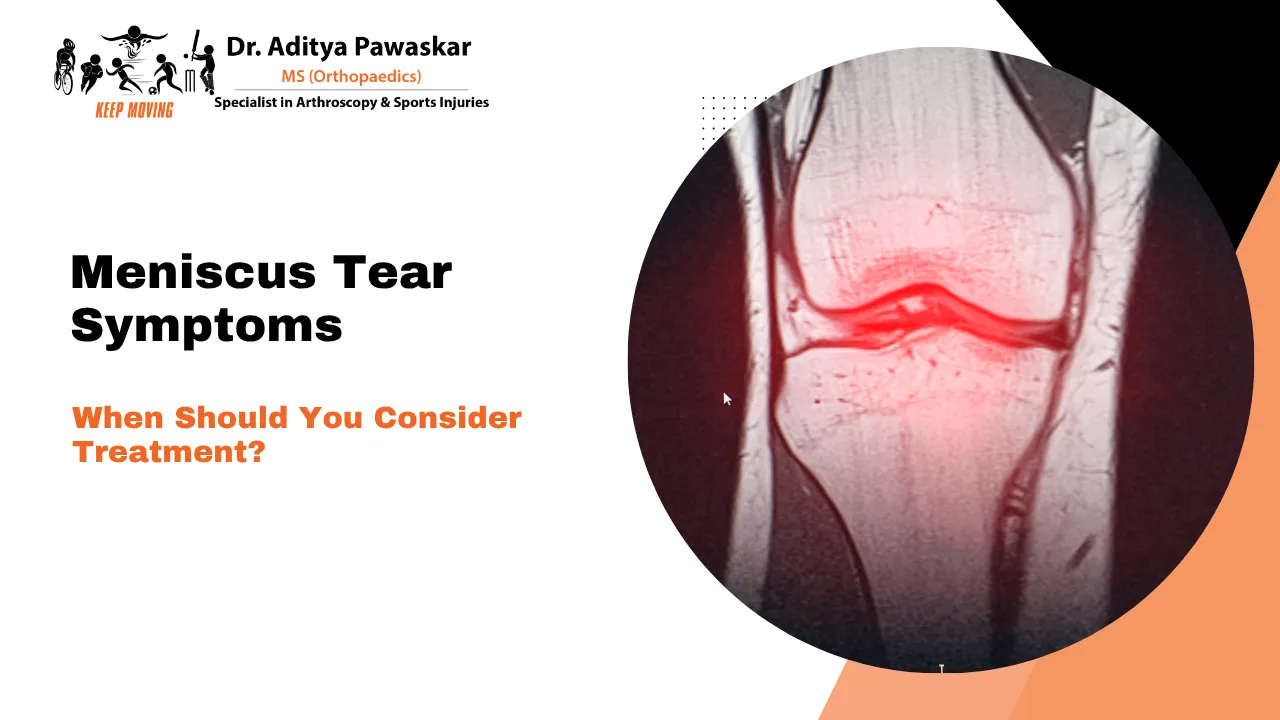
The knee is one of the most active joints in the human body and supports everyday movements such as walking, running, climbing stairs, and exercising. Inside the knee joint, the meniscus plays an important role in providing cushioning, stability, and smooth movement.
A meniscus tear is one of the most common knee injuries, especially among athletes and people involved in activities that require twisting or sudden changes in direction. While some small tears may improve with conservative treatment, others can cause ongoing pain, swelling, locking, or instability and may require medical intervention.
Understanding meniscus tear symptoms and knowing when to seek treatment can help prevent further knee damage and support faster recovery.
Dr. Aditya Pawaskar is a Consultant Arthroscopic Surgeon and Sports Injury Specialist in Mumbai, specialising in knee injuries, arthroscopic procedures, and sports-related
Dr. Aditya Pawaskar is a Consultant Arthroscopic Surgeon and Sports Injury Specialist in Mumbai, specialising in knee injuries, arthroscopic procedures, and sports-related conditions.
What Is a Meniscus Tear?
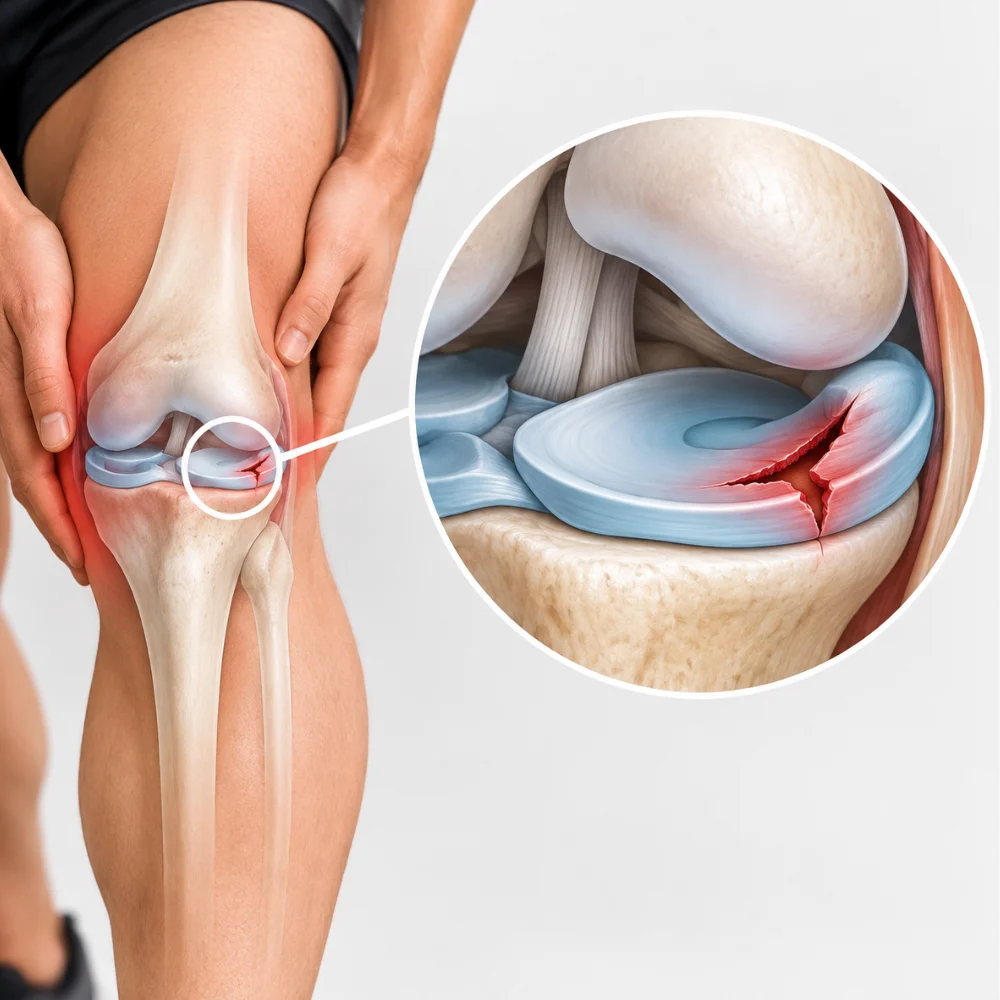
The meniscus is a C-shaped cartilage structure located between the thigh bone (femur) and shin bone (tibia) inside the knee joint.
Each knee has two menisci:
- Medial meniscus – located on the inner side of the knee
- Lateral meniscus – located on the outer side of the knee
The meniscus helps:
- Absorb shock during movement
- Distribute body weight evenly
- Improve knee stability
- Protect the joint cartilage
A meniscus tear occurs when this cartilage becomes damaged due to injury, twisting movements, or age-related degeneration.
What Causes a Meniscus Tear?
Meniscus tears can happen due to sudden injury or gradual wear and tear.
1. Sports Injuries
Athletes commonly experience meniscus tears due to:
- Sudden twisting movements
- Quick direction changes
- Landing incorrectly after a jump
- Direct impact during sports
Sports with higher risk include:
- Football
- Cricket
- Basketball
- Tennis
- Kabaddi
2. Degenerative Changes
As people age, the meniscus becomes less flexible and more prone to injury.
A simple movement such as:
- Squatting
- Kneeling
- Turning suddenly
may sometimes cause a tear in a weakened meniscus.
Common Meniscus Tear Symptoms
The symptoms of a meniscus tear can vary depending on the location and severity of the injury.
1. Knee Pain
Pain is one of the most common meniscus tear symptoms.
You may experience pain:
- Along the side of the knee
- During twisting movements
- While squatting
- During physical activities
2. Knee Swelling
Swelling may develop:
- Immediately after injury
- Several hours later
- After increased activity
Repeated swelling may indicate ongoing irritation inside the knee joint.
3. Knee Locking
Some people feel that their knee:
- Gets stuck in one position
- Cannot fully straighten
- Suddenly stops moving
This may happen when a torn piece of meniscus interferes with normal joint movement.
4. Clicking or Popping Sensation
A damaged meniscus may cause:
- Clicking sounds
- Catching sensation
- Feeling something moving inside the knee
5. Feeling of Knee Instability
You may feel:
- Your knee is giving way
- Difficulty trusting your knee during movement
- Weakness while walking or exercising
6. Reduced Range of Motion
A meniscus tear can make it difficult to:
- Bend the knee fully
- Straighten the leg completely
- Perform normal activities
When Should You Consider Treatment for a Meniscus Tear?
Not every meniscus tear requires surgery. Treatment depends on several factors, including tear type, symptoms, age, activity level, and overall knee condition.
You should consider medical evaluation if you experience:

Persistent Knee Pain
Pain that continues despite rest and basic care should be assessed by a specialist.
Repeated Knee Swelling
Frequent swelling may indicate ongoing irritation or damage inside the joint.
Knee Locking or Catching
A locked knee may indicate a displaced tear that affects joint movement.
Difficulty Returning to Sports
Athletes who cannot return to their activities due to pain or instability should seek expert evaluation.
Symptoms Affect Daily Activities
Treatment should be considered if knee problems affect:
- Walking
- Climbing stairs
- Exercise
- Work activities
How Is a Meniscus Tear Diagnosed?
A proper diagnosis helps determine the right treatment approach.
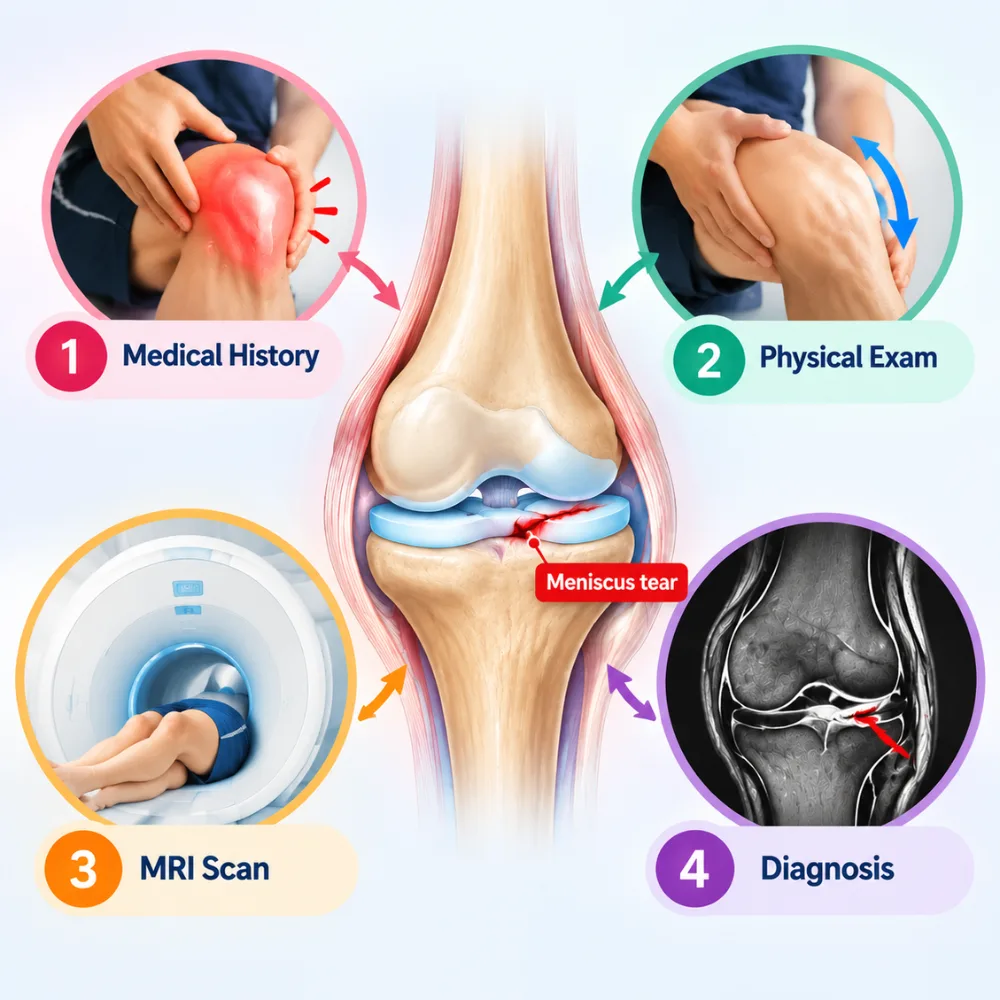
Physical Examination
A knee specialist evaluates:
- Pain location
- Knee movement
- Stability
- Signs of meniscus injury
MRI Scan
MRI is commonly used to assess:
- Meniscus damage
- Tear location
- Associated ligament injuries
- Cartilage problems
MRI Scan
MRI is commonly used to assess:
- Meniscus damage
- Tear location
- Associated ligament injuries
- Cartilage problems
Treatment Options for Meniscus Tear
Treatment depends on the severity and type of tear.
1. Non-Surgical Treatment
Small tears, especially those without locking or instability, may improve with conservative treatment.
Options include:
Activity Modification
Avoiding movements that worsen symptoms can help recovery.
Physiotherapy
A rehabilitation program focuses on:
- Strengthening thigh muscles
- Improving knee stability
- Restoring movement
- Improving function
Pain Management
Your doctor may recommend appropriate measures to manage pain and inflammation.
2. Meniscus Repair Surgery
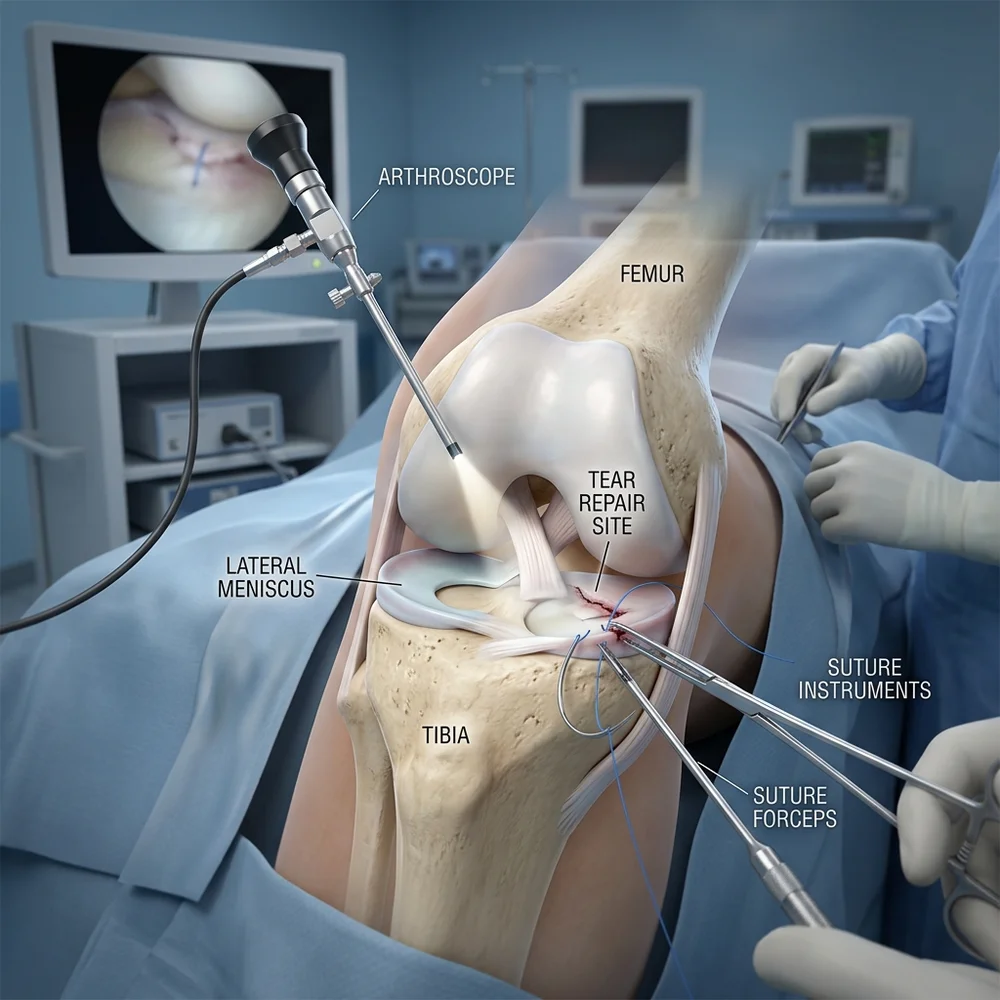
When the tear is repairable, preserving the natural meniscus is often preferred.
Meniscus repair involves:
- Stitching the torn portion
- Allowing the cartilage to heal
- Maintaining knee cushioning function
This option is commonly considered in younger patients or tears with good healing potential.
3. Partial Meniscectomy
In some cases, the damaged portion of the meniscus may need removal.
This may be considered when:
- The tear is not repairable
- Symptoms continue despite conservative treatment
- The damaged tissue affects knee movement
Recovery After Meniscus Treatment
Recovery depends on:
- Type of treatment
- Tear severity
- Patient activity level
- Rehabilitation progress
After surgery, rehabilitation usually focuses on:
- Reducing swelling
- Restoring knee movement
- Improving strength
- Gradually returning to activities
Following a structured rehabilitation plan helps achieve better outcomes and safe meniscus tear recovery.
Can a Meniscus Tear Heal Without Surgery?
Some meniscus tears can improve without surgery, especially when:
- Symptoms are mild
- The tear is small
- There is no locking or instability
However, tears causing repeated swelling, locking, or persistent pain may require surgical evaluation.
An experienced knee specialist can determine the most suitable approach after assessing your condition.
Why Choose Dr. Aditya Pawaskar for Meniscus Tear Treatment in Mumbai?
Dr. Aditya Pawaskar is a Consultant Arthroscopic Surgeon and Sports Injury Specialist in Mumbai with expertise in diagnosing and treating knee injuries.
His expertise includes:
- Meniscus tear treatment
- Meniscus repair surgery
- Knee arthroscopy
- ACL reconstruction
- Sports injury management
With specialised training in arthroscopic and sports injury procedures, Dr. Aditya Pawaskar provides personalised treatment plans based on the patient's injury, lifestyle, and recovery goals.
For patients looking for meniscus tear treatment in Mumbai, expert evaluation helps ensure the right treatment decision and better long-term knee health.
Learn more about Dr. Aditya Pawaskar
Frequently Asked Questions About Meniscus Tear Symptoms
Conclusion
Recognising meniscus tear symptoms early can help prevent worsening knee problems and support timely treatment. While some injuries improve with non-surgical care, persistent pain, swelling, locking, or instability should not be ignored.
If knee pain is affecting your sports performance or daily activities, consult an experienced knee specialist in Mumbai for proper diagnosis and personalised treatment guidance.
Dr. Aditya Pawaskar provides advanced knee arthroscopy and sports injury care to help patients recover safely and return to their active lifestyle.
For consultation, Contact us.

Dr. Aditya Pawaskar, MS (Orthopaedics)
- Specialist in Arthroscopy & Sports Injury, Mumbai
Visit: https://dradityapawaskar.com/