MCL Tear in Athletes: Return-to-Play Criteria for 2026
For athletes, a knee ligament injury can be frustrating because returning to sport involves more than just waiting for the pain to disappear.
A Medial Collateral Ligament (MCL) tear affects the stability of the inner side of the knee and can impact activities involving:
- Running
- Jumping
- Sudden direction changes
- Physical contact
- Pivoting movements
One of the biggest concerns athletes have after an MCL injury is:
“When can I safely return to my sport?”
Returning too early can increase the risk of re-injury, persistent instability, and reduced performance.
Modern sports injury rehabilitation focuses on criteria-based return to play, where athletes return only after achieving specific strength, movement, and functional goals rather than following only a fixed timeline.
Dr. Aditya Pawaskar, Consultant Arthroscopic Surgeon and Sports Injury Specialist in Mumbai, provides specialised evaluation and rehabilitation guidance for athletes recovering from knee ligament injuries.
Understanding MCL Tear in Athletes
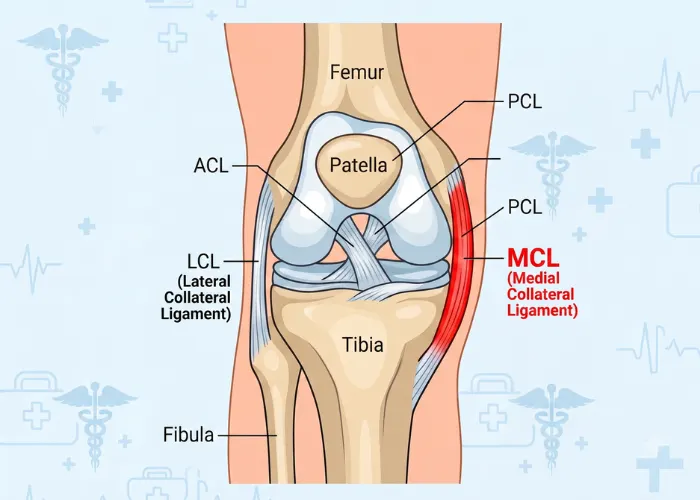
The Medial Collateral Ligament (MCL) is located on the inner side of the knee and provides stability against forces that push the knee inward.
Athletes commonly injure the MCL during:
- Football tackles
- Basketball movements
- Cricket fielding injuries
- Skiing accidents
- Martial arts
- Sudden twisting motions
An MCL tear can range from a mild stretch injury to a complete ligament rupture.
Grades of MCL Injury and Recovery Expectations
MCL Injury
A Grade 1 injury involves mild stretching of the ligament without major tearing.
Common symptoms:
- Mild inner knee pain
- Minimal swelling
- Tenderness
- No significant instability
Many athletes return to sports within a few weeks when strength and movement are restored.
MCL Injury
A Grade 2 injury involves partial tearing of the ligament.
Symptoms may include:
- Moderate pain
- Swelling
- Reduced knee stability
- Difficulty with side movements
Recovery usually requires structured rehabilitation before returning to competitive sports.
MCL Injury
A Grade 3 injury involves complete ligament disruption.
Symptoms include:
- Significant instability
- Difficulty performing sports movements
- Increased risk of associated ligament injuries
Some complete tears may heal without surgery, while others require surgical evaluation depending on instability and associated injuries.
Why Athletes Should Not Return Based Only on Time
A common mistake athletes make is returning to play because:
- Pain has reduced
- Walking feels comfortable
- The calendar suggests enough recovery time has passed
However, sports require:
- Explosive strength
- Balance
- Agility
- Quick direction changes
- Confidence under pressure
A knee may feel better but still lack the stability needed for competitive activity.
Return-to-play decisions should consider symptoms, strength, functional performance, and sport-specific ability.
Return-to-Play Criteria After MCL Tear (2026)
Before returning to competitive sports, athletes should achieve the following milestones.
1. No Pain During Sports-Specific Movements
The athlete should be able to perform:
- ✔ Running
- ✔ Cutting movements
- ✔ Jumping
- ✔ Sport-specific drills
without pain.
Pain during these activities indicates that the knee may not be ready for full competition.
2. No Swelling After Activity
The knee should remain:
- ✔ Free from swelling
- ✔ Comfortable after training sessions
- ✔ Stable after increased workload
Repeated swelling after activity may indicate incomplete recovery.
3. Full Knee Range of Motion
The athlete should regain:
- Complete knee bending
- Complete knee straightening
Limited movement can affect performance and increase injury risk.
4. Restored Muscle Strength
Strength testing is an important part of return-to-play evaluation.
Important muscle groups include:
- Quadriceps
- Hamstrings
- Hip muscles
Many rehabilitation protocols consider achieving around 90% strength compared with the uninjured leg as an important milestone before return to sport.
5. Functional Performance Testing
Athletes may undergo tests such as:
Single-Leg Squat
Evaluates:
- Knee control
- Balance
- Lower limb strength
Hop Tests
Assess:
- Power
- Symmetry
- Confidence
Agility Drills
Evaluate:
- Cutting ability
- Change of direction
- Sport readiness
6. Psychological Readiness
Returning after an injury is not only physical.
Athletes should feel confident performing:
- ✔ Sprinting
- ✔ Tackling
- ✔ Jumping
- ✔ Competitive movements
Fear of re-injury can affect performance and movement patterns.
Rehabilitation Phases After MCL Tear
Goals:
- Reduce pain
- Control swelling
- Protect ligament healing
Treatment may include:
- Activity modification
- Bracing when required
- Gentle mobility exercises
Goals:
- Restore muscle strength
- Improve balance
- Increase knee control
Exercises may include:
- Strength training
- Balance exercises
- Controlled functional movements
Goals:
- Prepare the athlete for competition
Training includes:
- Running progression
- Agility drills
- Jumping exercises
- Position-specific movements
When Can Athletes Return After MCL Tear?
Recovery time depends on injury severity.
| Injury Grade | Approximate Return Timeline |
|---|---|
| Grade 1 | 1–3 weeks |
| Grade 2 | 4–8 weeks |
| Grade 3 | Several weeks to months |
Athletes involved in high-demand sports may require longer rehabilitation to regain complete performance.
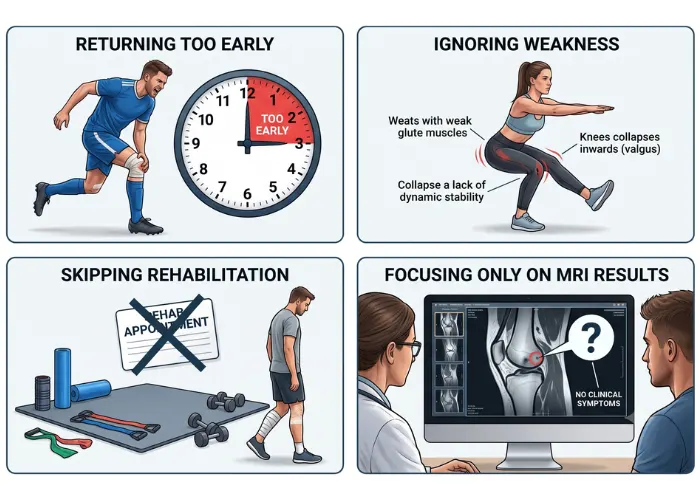
Common Mistakes Athletes Should Avoid
Returning Too Early
Playing before adequate healing increases the risk of recurrence.
Ignoring Weakness
Pain-free does not always mean sport-ready.
Skipping Rehabilitation
Strength and stability training are essential for preventing future injuries.
Focusing Only on MRI Results
Imaging is important, but functional performance determines whether an athlete is ready.
Can Athletes Return to the Same Level After MCL Injury?
Yes.
Most athletes with properly managed MCL injuries can return to their previous level of activity.
Successful return depends on:
- ✔ Appropriate treatment
- ✔ Complete rehabilitation
- ✔ Restored strength
- ✔ Functional testing
A structured recovery plan helps athletes return safely and confidently.
Why Choose Dr. Aditya Pawaskar for MCL Injury Treatment in Mumbai?
Consultation With Dr. Aditya Pawaskar
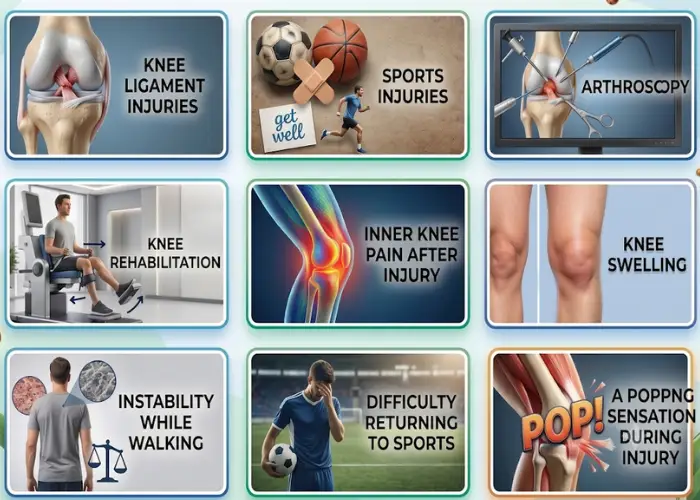
Athletes should seek expert evaluation if they experience:
Dr. Aditya Pawaskar
Consultant Arthroscopic Surgeon & Sports Injury Specialist
Specialised Care For:
- MCL Tear Treatment
- Sports Injuries
- Knee Ligament Injuries
- Arthroscopic Knee Surgery
- Inner knee pain after sports
- Knee instability
- Difficulty changing direction
- Swelling after activity
- Repeated knee injuries
consult:
📍 Consultation Locations:
Matunga Clinic, Mumbai
Apollo Spectra Hospitals, Tardeo, Mumbai
Frequently Asked Questions (FAQs)
- 1. How long does it take to return to sports after an MCL tear?
Return time depends on injury grade. Mild injuries may recover within weeks, while severe tears may require several months of rehabilitation. - 2. Can athletes play sports with an MCL tear?
Playing with an MCL tear before proper healing may increase instability and risk further injury. - 3. What tests determine MCL return-to-play readiness?
Doctors may assess strength, range of motion, balance, agility, functional tests, and sport-specific movements. - 4. Does an MCL tear require surgery in athletes?
Most isolated MCL injuries do not require surgery, but complete tears with instability or combined ligament injuries may need surgical treatment. - 5. Can an athlete return to the same performance level after MCL injury?
Yes, with proper rehabilitation and successful restoration of strength, stability, and confidence.
Conclusion
Returning to sport after an MCL tear requires more than simply waiting for the ligament to heal.
Athletes should achieve specific recovery milestones including:
- ✔ No pain
- ✔ No swelling
- ✔ Full movement
- ✔ Restored strength
- ✔ Successful functional testing
A gradual, criteria-based return-to-play approach helps reduce re-injury risk and supports a safer return to competitive performance.
For expert evaluation and sports injury rehabilitation guidance, consult Dr. Aditya Pawaskar, Consultant Arthroscopic Surgeon and Sports Injury Specialist in Mumbai.

Dr. Aditya Pawaskar, MS (Orthopaedics)
- Specialist in Arthroscopy & Sports Injury, Mumbai
Visit: https://dradityapawaskar.com/